A standalone family history of the Lakeman line — from the reclaimed polder soil of seventeenth-century Noord-Holland, through the spice islands of the Dutch East Indies, to Calgary, and on to three children in whom the line meets four other families.
PrologueTo come through
The Netherlands → the Indies → Calgary · c. 1660 to today
Every long family has a word for what carried it through. The Dutch have one. They say doorkomen — to come through. It is sharper than survive, which is passive, and than endure, which is merely patient. It means to break out the other side of the gale and reach the next harbour: to still be there, working, when the cholera year ends; still raising children when the empire collapses; still there at all, when by every reasonable accounting you should not be.
The Lakemans practised doorkomen for four hundred years. They practised it in the reclaimed soil of the Beemster polder, patching dikes and burying children. They practised it through the long decline of the Dutch Republic, the Napoleonic occupation, the cholera epidemics of the 1840s and 1850s. They practised it when a seven-year-old orphan named Pieter was placed with kin in Purmerend in 1852 because the same disease that had taken his mother three years earlier had now taken his father.
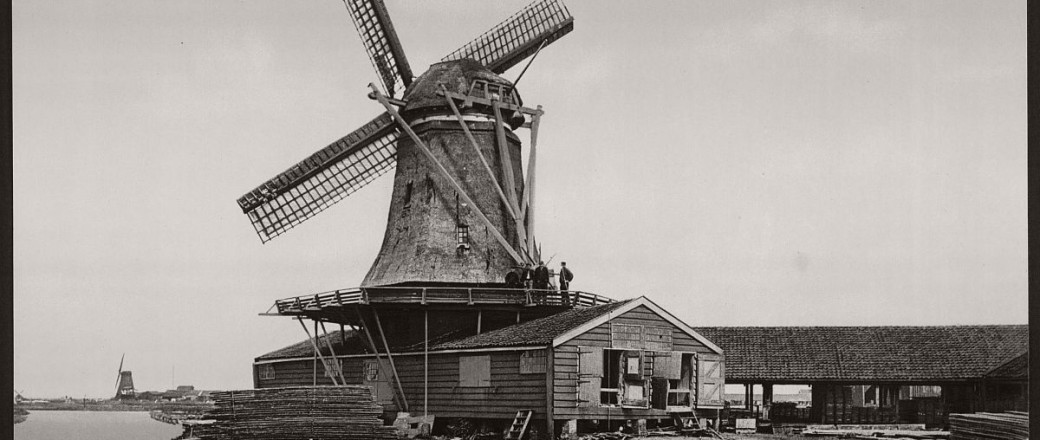
The name itself carries a hint of all this. Its deepest probable origin is not, as later generations assumed, man of the lake, but Lakenman: cloth-man, a maker or finisher of laken, woven wool. Somewhere around 1600, in the Waterland villages north of Amsterdam, a Lakenman family worked cloth for a living. By the time the records become legible in the mid-1600s they had moved onto the new polder soil of the Beemster — a reclaimed lakebed drained by forty-three windmills between 1607 and 1612 — and were learning to farm instead. The Dutch say, with characteristic dryness, God schiep de aarde, maar de Hollanders maakten het zelf — God created the earth, but the Dutch made themselves. The Lakemans were born onto land that had been made.
This is their story, one generation at a time, from a Dutch polder in the 1660s to an Alberta household in which the Lakeman line meets four other family streams and passes, together, to three children.
Chapter OneThe earliest Lakenmen (c. 1580–1700) — cloth, water, and the new soil
c. 1580–1700 · the Waterland villages & the new Beemster polder
The earliest figures in the Lakeman story exist as silhouettes — names that surface in fragmentary parish records, notarial rolls, and occupational lists, their biographies reconstructed from the patterns around them. A caution belongs here at the outset: the line becomes proven by primary record only from the 1840s forward (see the Notes). These earliest generations, back through the polder farmers to a 1673 Beemster baptism, are probable, resting on strong continuity of name and place rather than on a document for every link. What survives is enough to know the shape of the family, not yet each of the men.
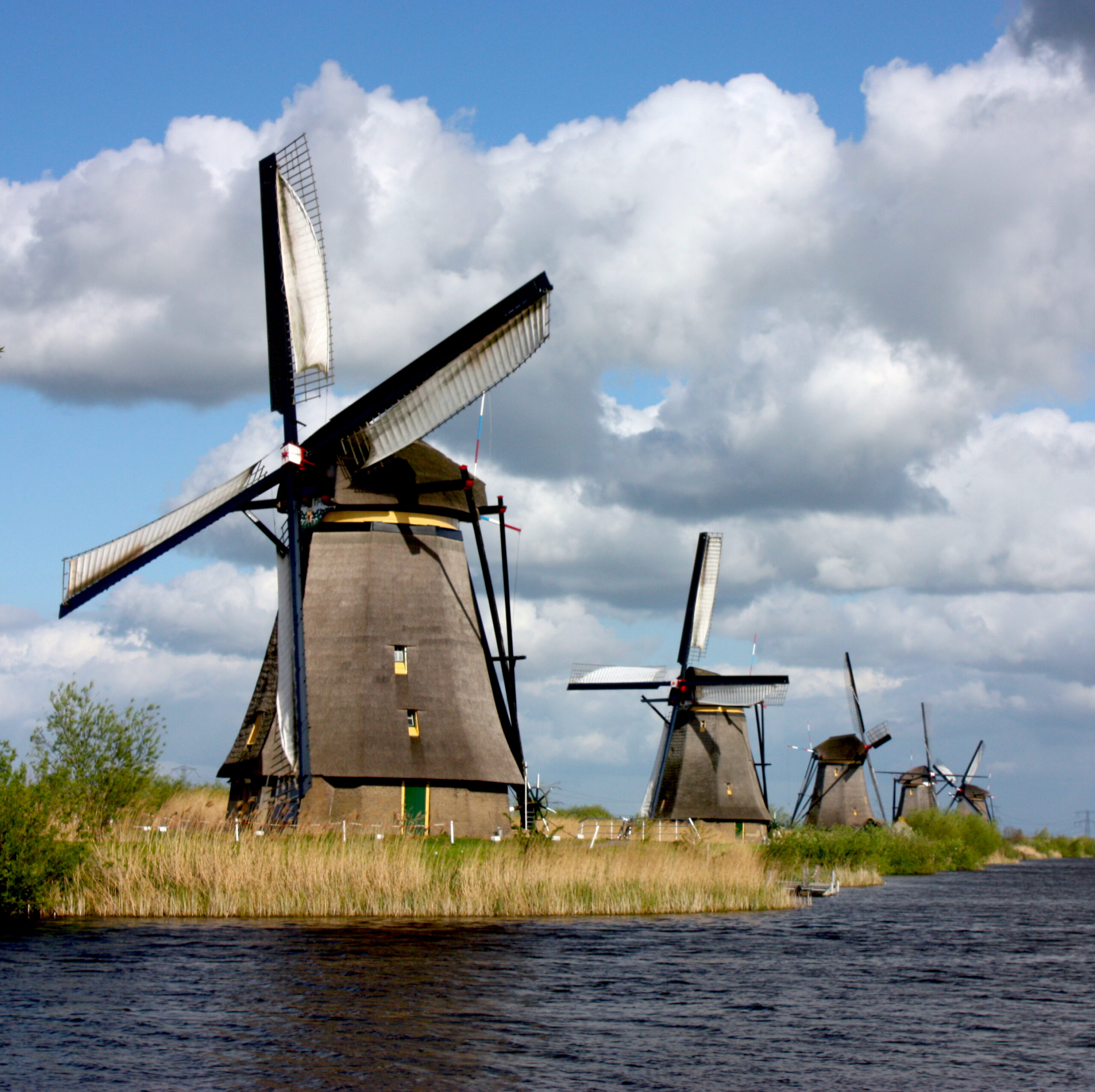
The deepest probable ancestor is Jan Pietersz de Lakenman, a cloth merchant or dyer working in the late sixteenth century around Edam and the Purmer, small Waterland towns north of Amsterdam, in a landscape about to be utterly transformed. In 1607 an Amsterdam consortium began the most ambitious land-reclamation project then attempted: the draining of the Beemster, an inland lake of 7,200 hectares. Forty-three windmills in three tiers pumped it dry over five years; by 1612 a geometric grid of fields, dikes, and tree-lined roads was laid across soil that had never before been stood on. Learn more about the Beemster polder →
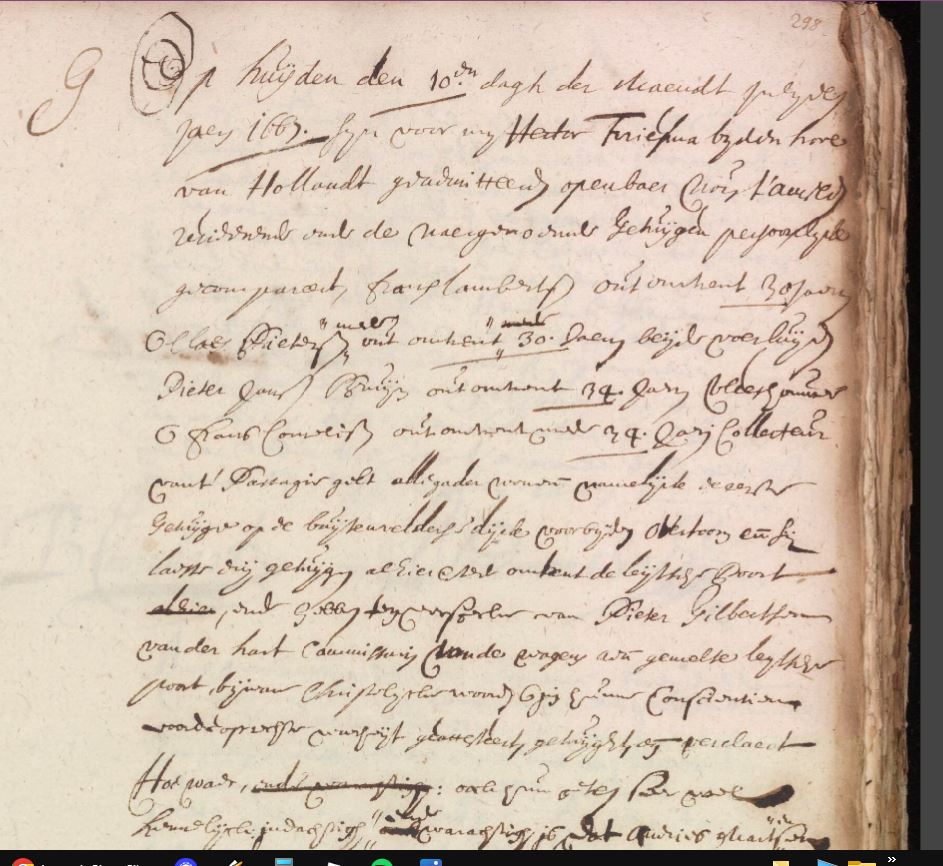
By mid-century, men named Lakenman appear in the new polder’s records. Pieter Jansz de Lakenman, plausibly Jan’s son, is named in early Beemster fragments. A Sijmon Pietersz de Lakenman appears in mid-1600s Edam notarial documents as a lakenwerker (a cloth finisher), preserving the family trade even as the family took up farming. And by 1673 a Sijmon Lakenman is recorded in the Beemster Reformed Church register as father of a daughter, Trijntje, baptized on 4 March: “Den 4 dito, is het kind van Sijmon Lakenman gedoopt, genaemt Trijntje.” It is the first parish record to anchor the family to Beemster in nearly the form the surname carries today.
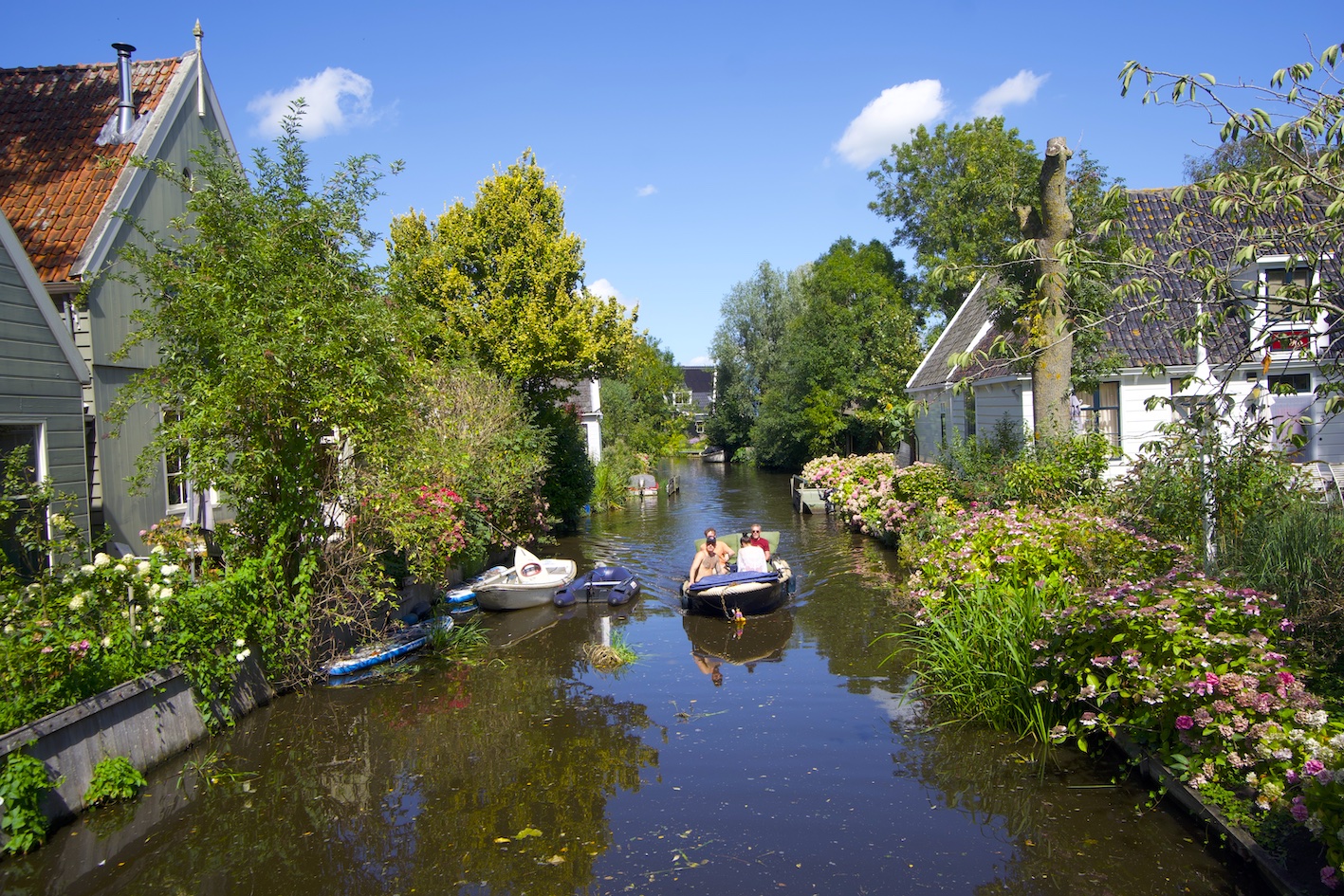
This was the world of the Dutch Golden Age — Vermeer and Rembrandt at work nearby, the VOC the most valuable corporation on Earth — but the family took no direct part in that wealth. Learn more about the Dutch Golden Age → They were polder people. They paid their tithes to the Reformed church, took their turns at schouwdagen, the unpaid days of dike maintenance every polder farmer owed the collective, and raised children in thatched farmhouses built on raised mounds to outlast sudden floods. Their reward, generation by generation, was the soil itself: rich, black, and theirs to work as long as they could pay the rent and patch the dike. Everything that comes later — the colonial career in Java, the geologist in Calgary — was built by men whose names survive only as smudges in baptism books. They had a foothold on land that had been a lake within their fathers’ lifetimes. That was enough.
Chapter TwoThe polder centuries (c. 1698–1852) — four farmers and a surname
c. 1698–1852 · Beemster → Beets → Purmerend · the polder centuries
The first Lakeman whose existence rests on a clear, datable parish entry is Sijmon Sijmonsz Lakeman, baptized in the Beemster Reformed Church around 1698 — almost certainly a son of the elder Sijmon of the 1673 entry. Around 1715 he married Grietje Gijsbertsdr Snijders, and they raised six children in the Beemster registers, among them Jan, born 1720. Like every Beemster family of his day they worked a mixed dairy-and-grain farm — cattle, butter and cheese for the Purmerend markets, grain in the fields between the canals — and owed the dikes their schouwdagen, the unpaid days of maintenance every polder farmer gave the collective.
For the next four generations the pattern barely moved. Jan Sijmensz Lakeman (1720–1777) married Guurtje Lourensdr Hoogetoorn, of a family known for steady service on the heemraadschappen, the boards that managed the dikes and canals, and lived his whole life within sight of the polder where he was baptized. His son Sijmon Jansz Lakeman (1756–1836) married Lijsbeth Klaasdr Kramer in 1779 and raised six children, the third of them Pieter Zijmonsz, baptized at Beets on 23 August 1783. And Pieter, a pachter — a tenant farmer — at Purmerend, married Mientje Adriaansdr Kruit and raised five more, among them Sijmon, born in 1819. Farm to son, son to farm: the quiet succession ran on while the country around it convulsed.
Because convulse it did. Sijmon Jansz’s eighty years held the most disruptive transformation in Dutch history since the Reformation — born a citizen of the old Dutch Republic, he died a subject of a constitutional monarchy under King William I, the country reinvented four times between those two states. The polder was a place the gales of history blew over rather than through; but one administrative shock is directly visible in the family record. In 1811, by Napoleonic decree, all Dutch citizens had to register fixed family surnames. Until then the Lakemans had used the patronymic system — Jan Sijmensz, Jan son of Sijmon — without a settled family name. They had been called Lakeman or Lakenman informally for generations, but it was Napoleon, of all people, who pinned the surname permanently into place.
Pieter died sometime after 1850, at a substantial age — long enough to see the first Dutch railway weave the old polder economy into a national market. His third son, Sijmon, was the one to whom the family land and line passed — and Sijmon walked straight into the worst year the family would ever see.
Chapter ThreeSijmon Lakeman (1819–1852) — the year the line nearly ended
1819–1852 · Purmerend · the year the line nearly ended
Sijmon Lakeman was born in 1819 in Purmerend to Pieter Sijmonsz and Mientje Kruit, the middle son, and inherited the working share of the family land. On 8 May 1842, aged twenty-three, he married Trijntje Tergand, then thirty-four — a woman of the Beemster country, born at Hobrede around 1808, some eleven years his senior. (The marriage record names his parents as Pieter Sijmonsz Lakeman, landbouwer, and Mientje Kruit, and gives Sijmon’s own trade then as farming.)
They had several children over the next seven years, and lost some of them in infancy as families of that time so often did. Two survived to carry on: a daughter, Mientje, and a son, Pieter, born in 1845 — who would become the most consequential figure in the entire Lakeman story.
Then, in 1849, the cholera came. It was one of the great pandemic waves of the century, travelling the new shipping and railway networks out of the Ganges Delta; Purmerend lost over a quarter of its young children in the 1849 wave alone. The cause — contaminated water — was not yet understood, and the standard treatments did nothing. Trijntje Tergand died on 20 February 1849, aged forty-one, in the midst of that epidemic; her newborn son Cornelis died days earlier. Sijmon remarried seven months later, on 16 September 1849, to Antje Root, a twenty-six-year-old Purmerend woman, and their daughter Marijtje was born in July 1850.
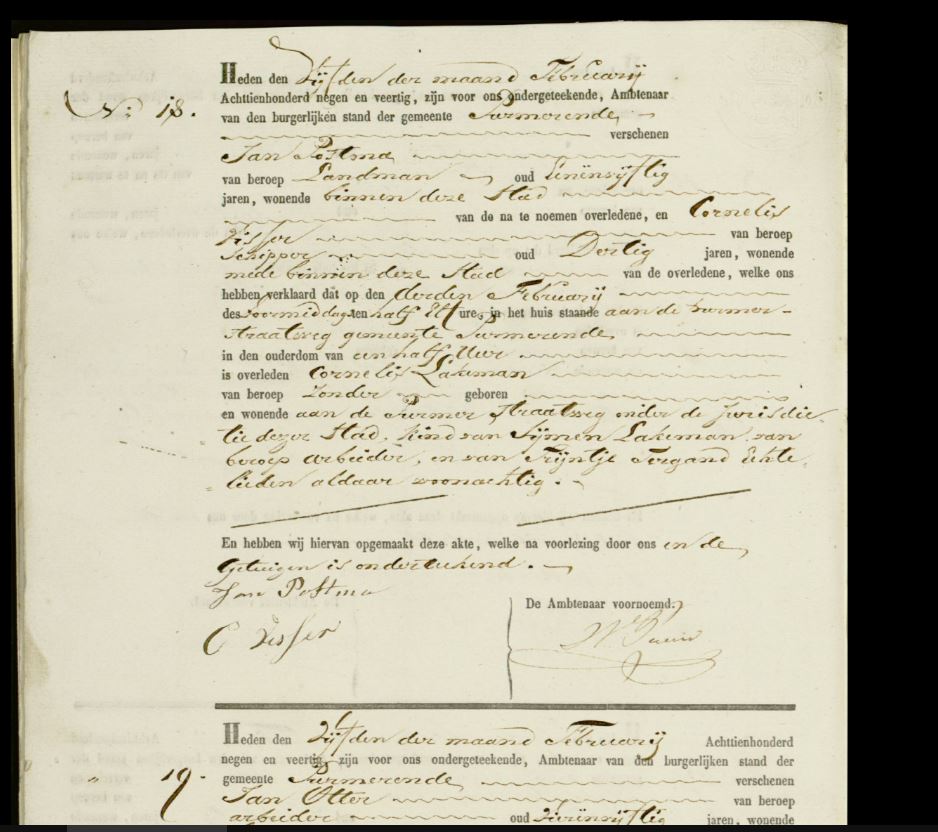
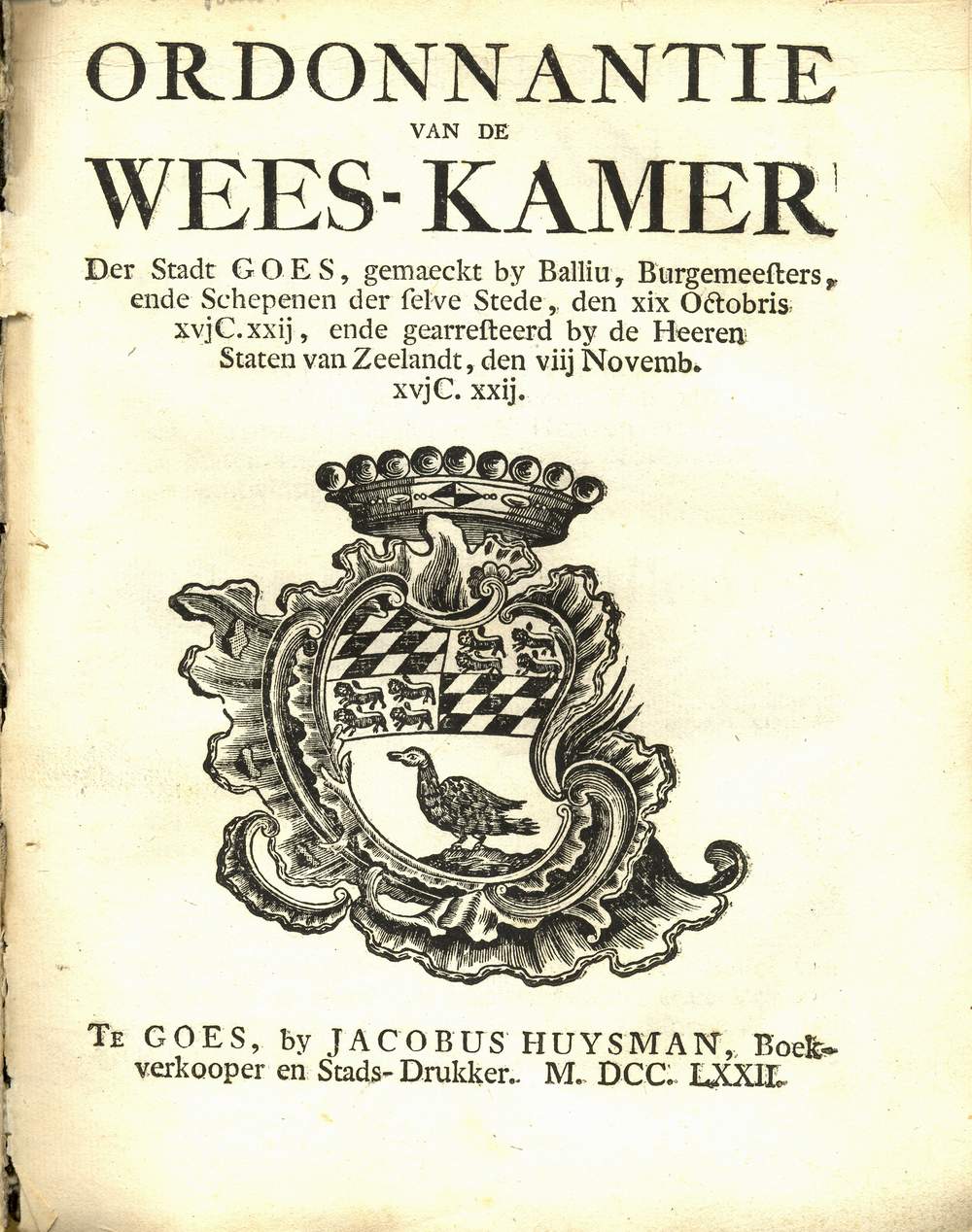
It did not last. In June 1852 the cholera returned, and on 15 June 1852 Sijmon Lakeman died in Purmerend, aged thirty-three. The civil register is starkly bureaucratic: Sijmon Lakeman, arbeider, overleden — Sijmon Lakeman, labourer, deceased. The young children left behind, among them the boy Pieter, then seven, were placed with kin by the Weeskamer, the Dutch civil orphan board; the widow Antje remarried within a few years, scattering the household further. The whole line now ran through that one orphaned boy. His father was dead, his mother was dead, and brothers and sisters had died before him. He survived. The next chapter is the story of what he did with that.
Chapter FourPieter Lakeman (1845–c. 1900) — the orphan who left the polder
1845–c. 1900 · Purmerend → Zeeland → the Dutch East Indies
Pieter Lakeman, born in Purmerend in 1845, was seven years old when both parents and three of his four siblings were dead. The Weeskamer placed him with extended Lakeman or Tergand kin around Purmerend. The next two decades are thinly documented — but by his late twenties he had pulled himself out of an orphaned childhood into a working adult life.
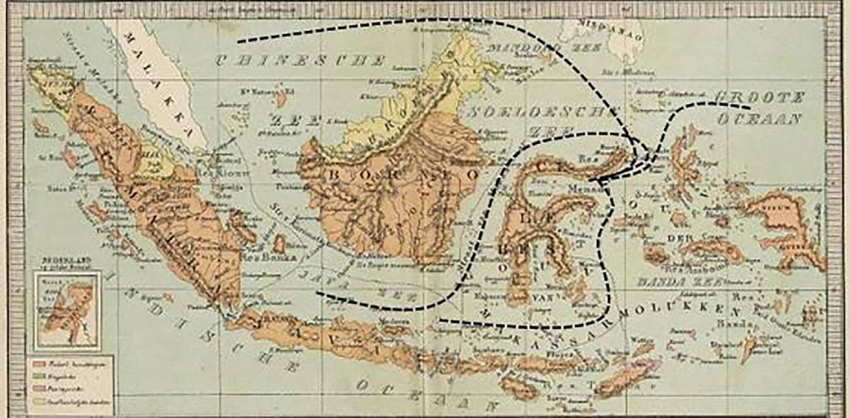
On 5 August 1874, in the Zeeland port of Zierikzee, Pieter married Jacoba Leunis, born in the fishing village of Renesse on 1 February 1853 — daughter of Leendert Leunis and Katharina Willemina Panser. The marriage record gives Pieter’s trade as hulponderwijzer (assistant schoolteacher) and names his parents as Sijmon Lakeman and Trijntje Tergand, the couple of the previous chapter: the documentary thread that ties the orphan of 1852 to the cholera household he came out of. Sometime in the late 1870s the couple made the largest move in the entire Lakeman record up to that point: they left for the Dutch East Indies.
They sailed east. The Dutch East Indies had been the central jewel of the Dutch colonial empire for more than two centuries, and by the 1870s it was the most profitable colonial economy in the world per square mile. Coffee, sugar, rubber, tin, and quinine flowed out of the islands toward European markets; administrators, soldiers, teachers, traders, and missionaries flowed in the other direction. Pieter and Jacoba were part of that inbound flow. Learn more about the Dutch East Indies →
He went as a teacher in the colonial school service. The records track his rise in it: hulponderwijzer (assistant teacher) at his marriage in 1874, and by 1881 Oost-Indisch hoofdonderwijzer, an East Indies head teacher, the rank named on his son’s birth certificate while he was home on leave. The children’s birthplaces map the family across the archipelago, posting by posting: Leonardus born around 1877 in Muntok, on the tin island of Bangka off Sumatra’s eastern coast (himself a teacher in time); Catharina in March 1879 in Malang, the cool highland coffee country of east Java; Geertruda around 1880 in Ternate, in the spice-laden Moluccas at the colony’s eastern edge; Pieter Karel Willem — the figure of the next chapter — born 27 January 1881 during a spell of home leave in The Hague; and Jacoba Helena in 1888 in Pasoeroean, on Java’s north coast. Sumatra’s tin coast to the eastern spice islands to the Java highlands to the north shore: the school service moved them the length of the colony.
What the family’s daily life in the Indies was like is not recorded. By the late 1890s they had repatriated to the Netherlands for good. Pieter’s death date is not yet confirmed; Jacoba outlived him by decades, dying in the occupied Netherlands in 1942. The orphan boy from Purmerend had done what none of his ancestors ever had: he left the polder, left the country, and raised his children on the other side of the world — and put a son on the path into the colonial administration.
Chapter FivePieter Karel Willem Lakeman (1881–1966) — the administrator and the long ending of the empire
1881–1966 · The Hague → Java → the Netherlands
Pieter Karel Willem Lakeman — known universally in the family as P.K.W. — was born in The Hague on 27 January 1881 during one of his parents’ returns to the Netherlands, and spent most of his childhood back in the Dutch East Indies, where his father was building his colonial career.
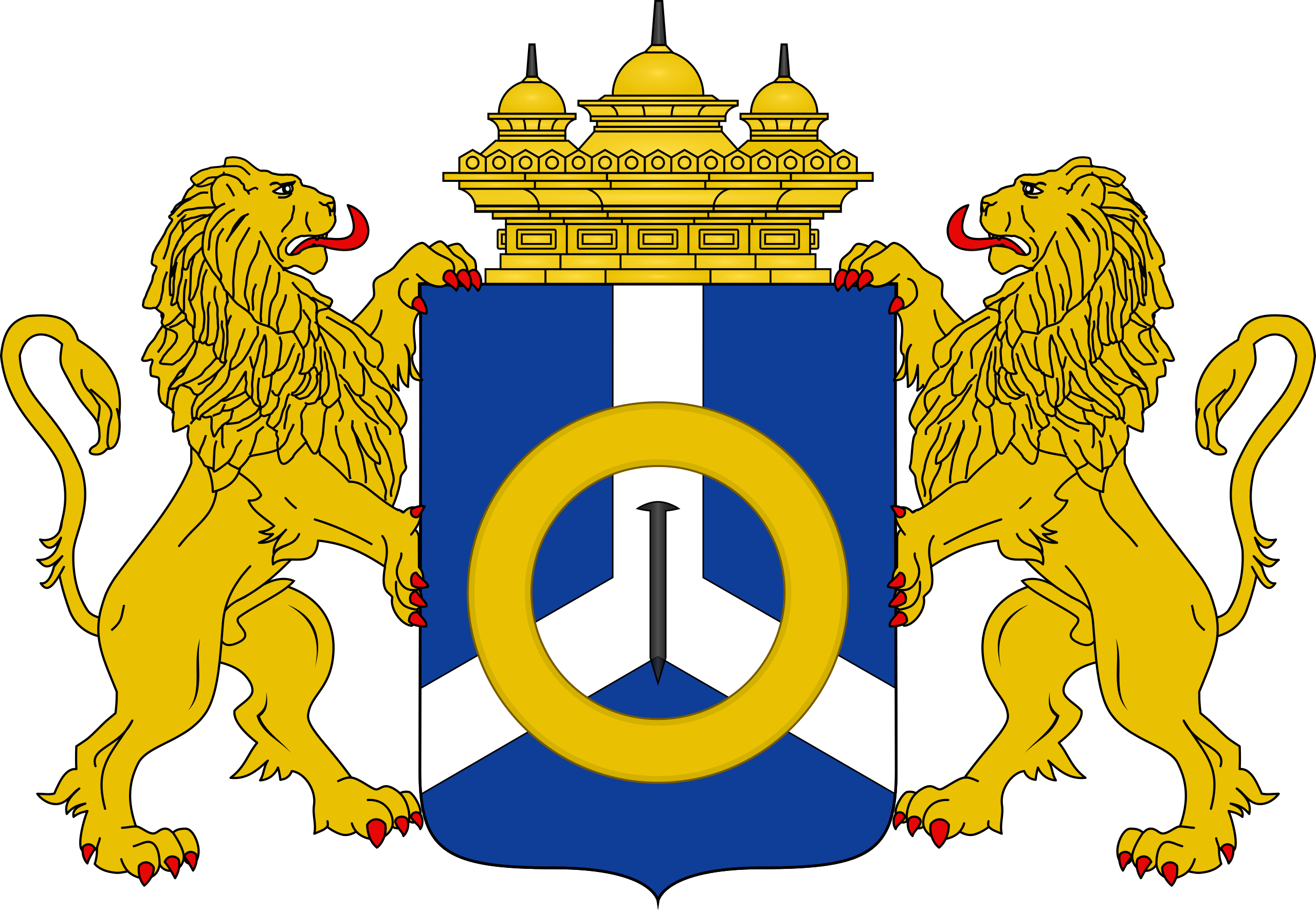
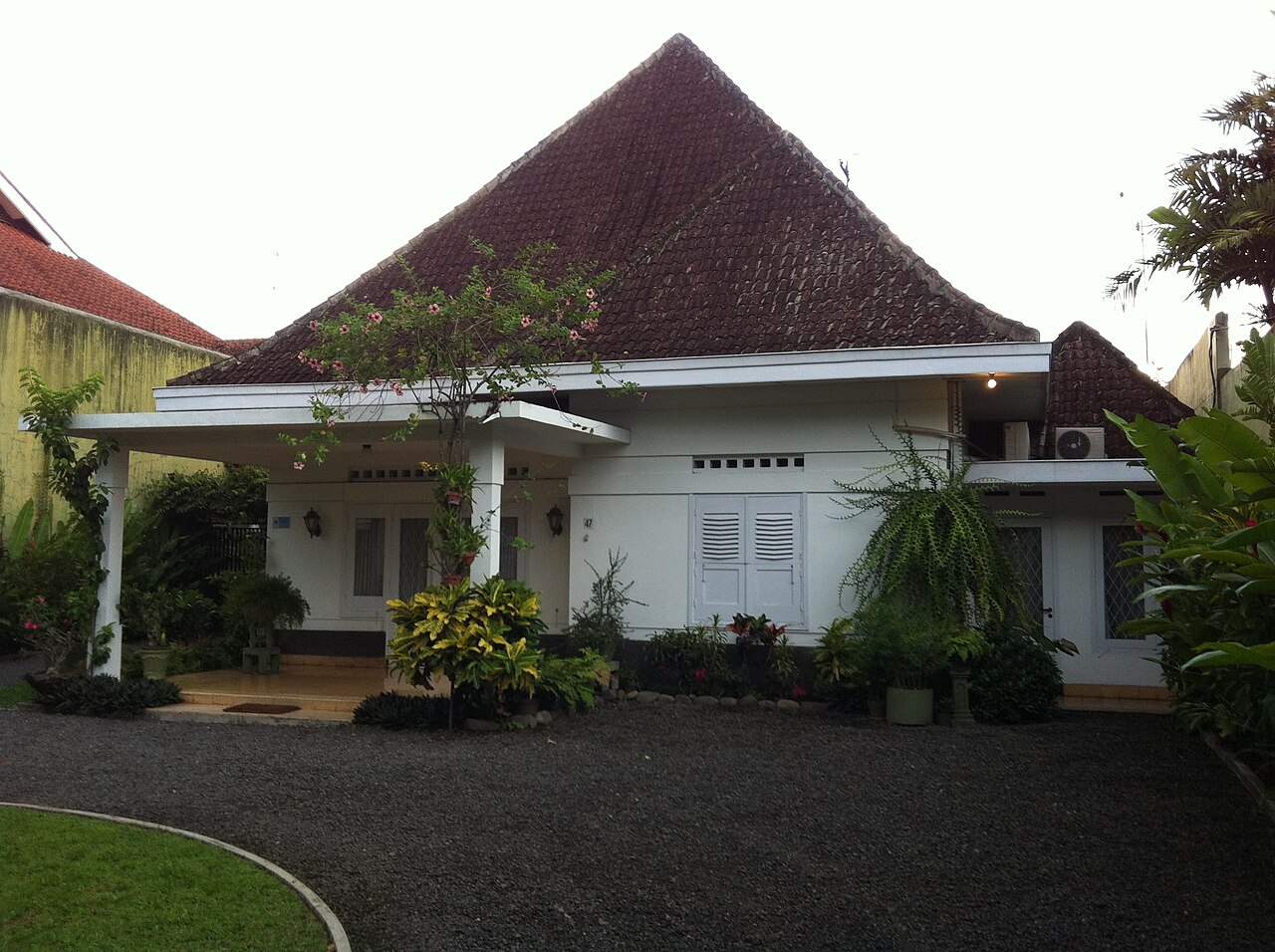
He served in the Binnenlands Bestuur, the colonial civil administration, and rose to burgemeester (mayor) in the Dutch East Indies, in central and east Java. Much of what follows comes down by his son’s family account. The post was not ceremonial: his job was to patrol the whole district on horseback, not merely the town — real governance across a wide rural territory of rice paddies and volcanoes.
He married once, to Sophia Timmermans, who came from Franeker in Friesland — her father a police brigadier — and carried strong Frisian roots. They had two sons: Rienk (born 1 October 1918 in Soerabaja, who carried this line forward) and Pieter, who became a medical doctor and had two daughters, whom Martin met once as teenagers.
P.K.W. retired and sailed home to the Netherlands in 1933, when Rienk was fifteen — the end of his colonial service, and as it turned out, near the end of the empire itself: the Japanese invaded in March 1942, defeated the colonial army in nine days, and interned every European in the colony; the Dutch fought a failed war from 1945 to 1949 to recover the islands, and Indonesia became independent in 1949. P.K.W. lived quietly in the Netherlands until his death in 1966, aged eighty-five. His grandson Martin remembers visiting him once, in his eighties.
Chapter SixRienk Lakeman Sr. (1918–1993) — the geologist who crossed the world
1918–1993 · Soerabaja → Venezuela → Calgary → London → Kuwait → Singapore
Rienk Lakeman Sr. was born in Soerabaja, on the northeast coast of Java, on 1 October 1918 — son of P.K.W. and Sophia Timmermans. He grew up an administrator’s son in the late years of the Dutch East Indies, and was fifteen when the family sailed home to the Netherlands in 1933. He earned a doctorate in geology, and that science would carry him around the world.
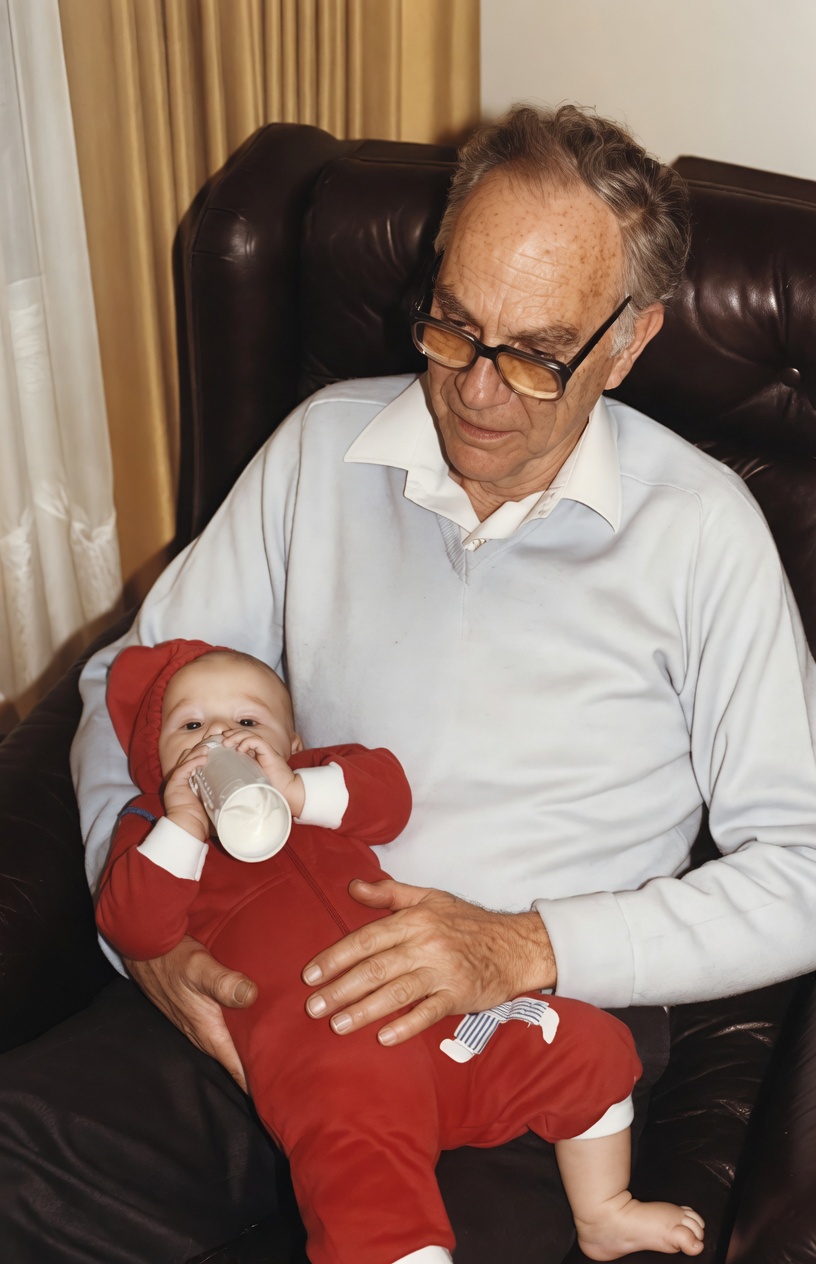
He married Suzanna Verboom, born in Ter Aar six days before him — the tailor-barber’s daughter who carried a needle around the world, and whose own chapter comes next.
Rienk’s working life with the oil industry mapped the postwar world. In the early 1950s he worked for Royal Dutch Shell in Venezuela; when the government nationalized Shell’s assets in 1955, the family — Suzanna, Rienk, and their two eldest sons — moved with a whole contingent of ex-Shell employees to Calgary, becoming Canadian citizens. In 1962 the company he worked for was bought by British Petroleum, and he took a post at BP’s head office in London. From there the postings ran on: Kuwait in 1967, back to London in 1970, then Singapore. He retired in 1974, and on the way back to Calgary the family stopped in Holland and watched the spectacular 1975 New Year’s fireworks before settling home for good.
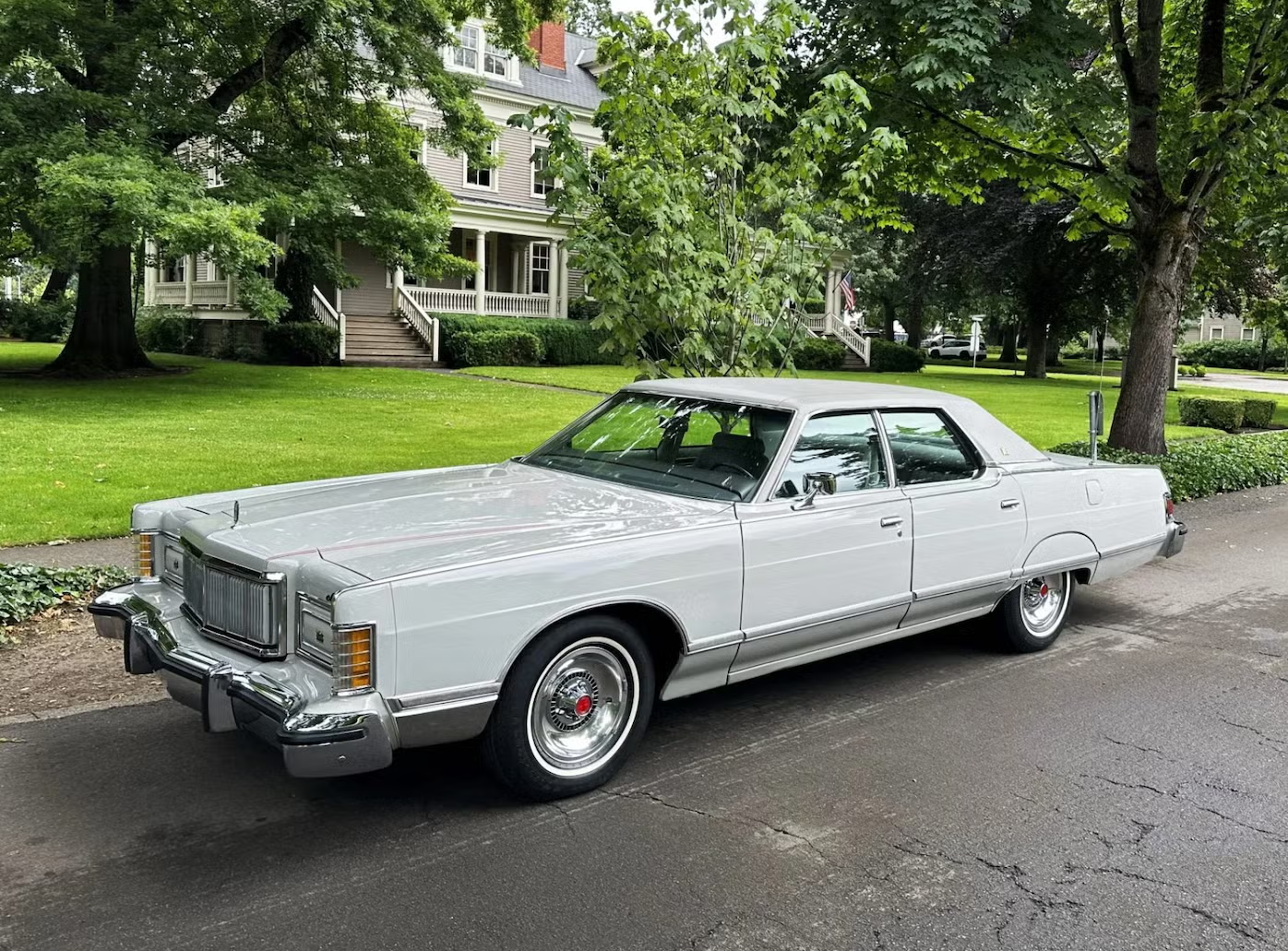
He was a tall man, about six foot three, fluent in seven languages, devoted to classical music, the Olympics, world events, and the natural world. The family remembers him still climbing trees at seventy. His Calgary house faced Lake Bonavista, a small artificial lake dug from farmland — so the man who had crossed the world for a living ended up, again, beside water. He drove a Mercury Grand Marquis the family called a “land yacht”; Suzanna drove a Camaro. He died in Calgary in 1993, at seventy-four.
Chapter SevenSuzanna Verboom (1918–2018) — the needle, the shears, and the people behind them
1918–2018 · Ter Aar → Calgary · the tailor-barber’s daughter
Every family that crosses an ocean carries something small enough to pack and useful enough to keep. The Lakemans carried a geologist’s training and seven languages. The woman Rienk married carried a needle.
Suzanna “Suus” Verboom — the name is said Ver-bome — was born in Ter Aar, a canal village in the green heart of Zuid-Holland south of Amsterdam, on 25 September 1918, six days before Rienk himself. She lived a hundred years exactly, dying in Calgary in 2018. Her father kept a barber shop built onto the house and worked, too, as a tailor; he taught his daughter to sew and to cut cloth, and she became, by her son Martin’s account, a most excellent seamstress — a trade she would carry across Venezuela and England and Singapore and set down at last in Alberta.
The records put a name and a date to that remembered father. On 15 May 1918, in Haarlemmermeer, a tailor named Johannes “Hannes” Verboom — twenty-four, born in Ter Aar, kleermaker by trade — married Leentje Vriesman; and that same year, family history records, “Opa Hannes” opened the barber shop on the Kerkweg. The trade and the timing match the remembered grandfather exactly, and the barbering business he founded ran on through his son “Yap” into the late twentieth century in the same building.
What the family remembers most clearly is “Grandpa Verboom” — the kapsalon built right onto the house on the Kerkweg in Ter Aar. Martin, staying at that house as a boy in the early 1960s, remembered a Holland still half a step out of an older century: the toilet just off the back door on a covered patio, a chamber-pail in the upstairs bedroom. The trade ran right through the family. A brother, Pieter “Piet” Verboom, and his wife Kelly kept a hair salon a block away — Martin remembered the whole household piling onto one oversized Vespa, parents and two daughters aboard. Another brother, Jacob “Yap” Verboom, took over Grandpa’s barber shop when the old man retired, so the shears stayed in the family and in the same town. A sister, Jenny, with her husband Jan, kept the closest tie to the Canadian household: when the Lakemans came back from Singapore in 1974–75 they stayed with Jenny and Jan and watched the famous open-sky Dutch New Year’s fireworks, and the couple later crossed the Atlantic to visit Calgary. One sister, family memory holds, died in infancy.
Suzanna’s own line runs deep and well-documented — the Sliedrecht river-village Verbooms on her father’s side, the Noord-Holland polder-diggers and Goeree-Overflakkee islanders on her mother’s, traced by Dutch civil records back into the eighteenth century. That deeper roll has a records page of its own. What she carried into this family was simpler and more portable: across Venezuela, Canada, England, Kuwait, Singapore, and home to Calgary, at every stop, a needle. Suzanna’s needle, and the trade her tailor-barber father taught her, is the small portable thing this family carried.
The Verboom records — Suzanna’s deep Dutch ancestry →
Chapter EightMartin Gerard Lakeman (b. 1957) — the Calgary generation
b. 1957 · Calgary · the first Lakeman born in Canada
Martin Gerard Lakeman was born in Calgary on 30 March 1957 — the youngest of Rienk and Suzanna’s three sons, and the only one born in Canada. His older brothers were Rienk Jr., who became an engineer and worked abroad, and Alexander “Lex.”
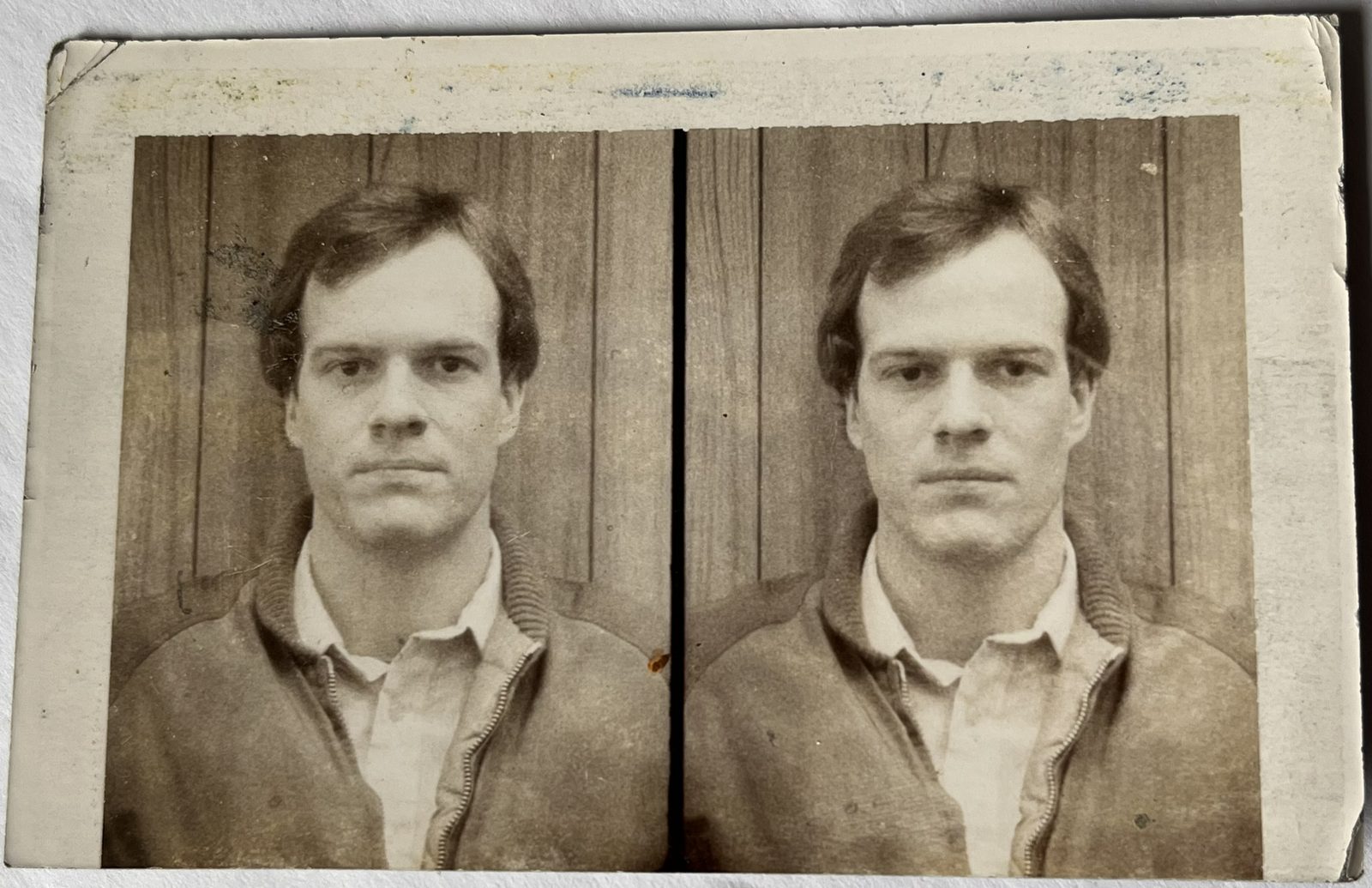
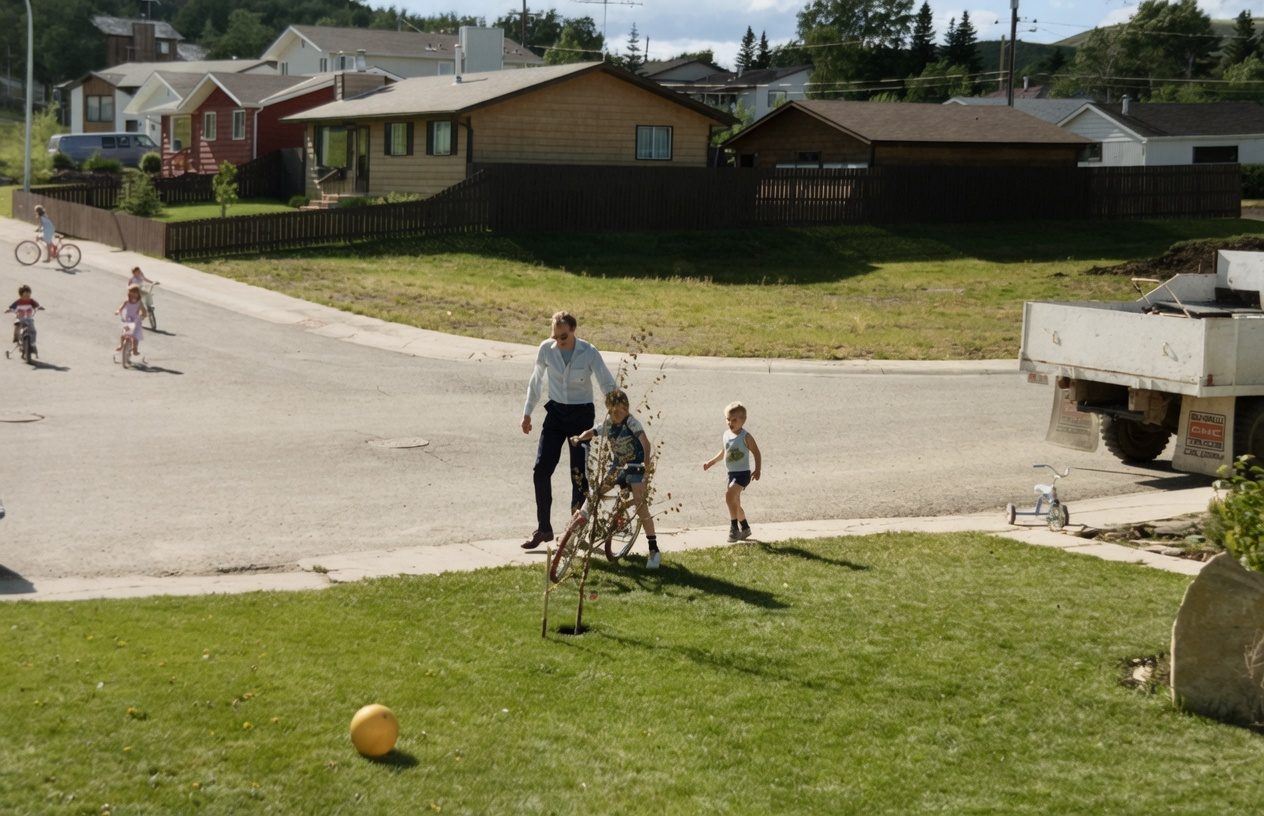
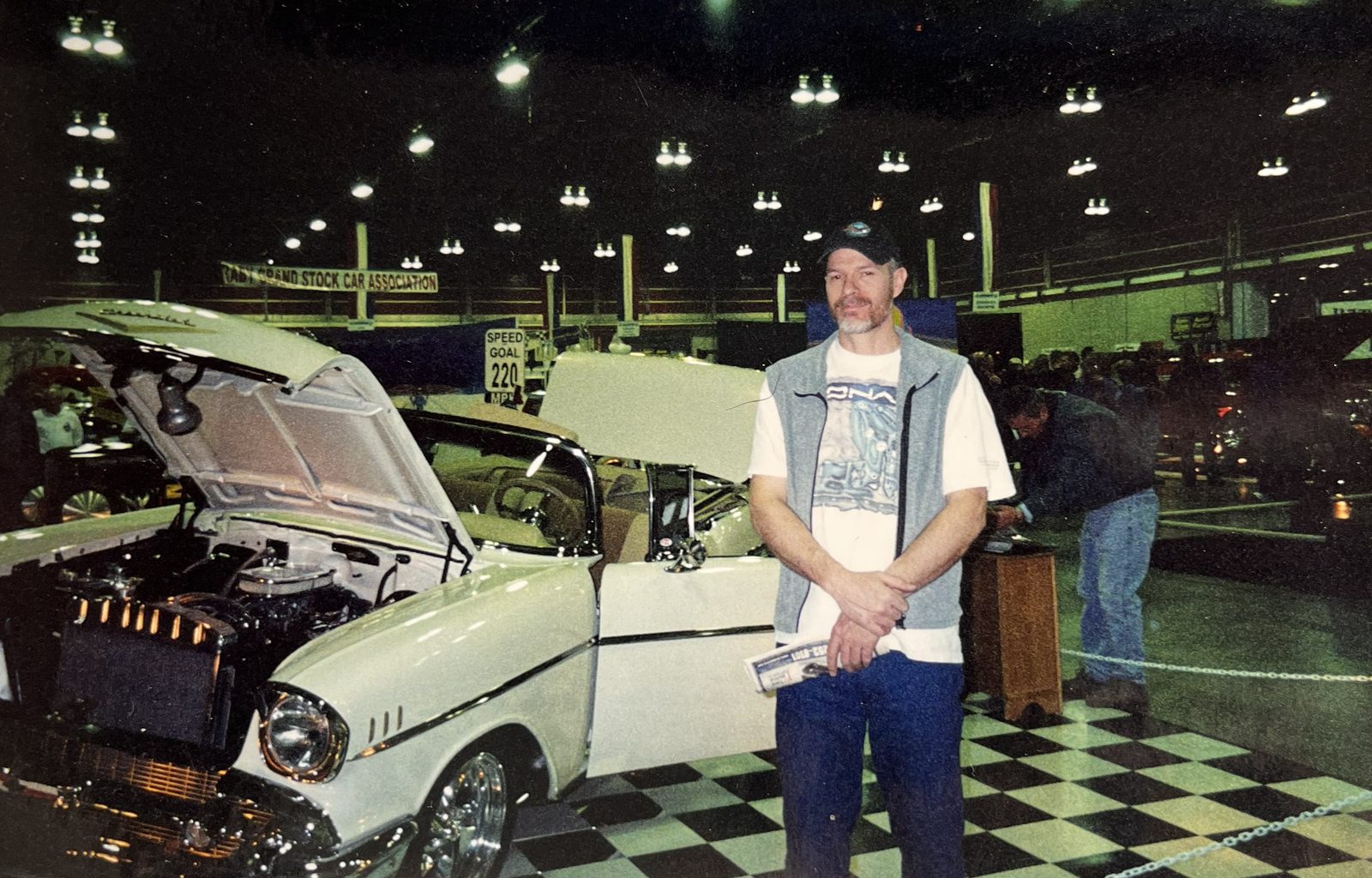
He grew to six feet five inches — in this family, the kind of height that makes his son, at five-foot-eleven, the short one. He made his working life in Calgary as a taxi and limousine dispatcher, decades of it, much of it on the night shift; and in 1980 his son Thomas Martin Cheesman was born — the person through whom the Lakeman line runs forward into the present.
How that came to pass is a story Martin tells at his own expense. Elizabeth, the Docherty girl he would marry, asked a mutual friend named Jim to introduce her to his tall blond friend — and Jim, as it happened, had two tall blond friends, and the one she had in mind was the other one. “Soooo, in a way,” Martin writes, “if it wasn’t for Jim I might never have been your father!” Chance, in this family, has crossed oceans; it seems only right that the last link in the chain was a case of mistaken identity.
Martin’s was a borderless childhood. Because Rienk’s career moved with the oil industry, he grew up across the postings: a preparatory school in England, where he spoke perfect Queen’s English; an American school in Kuwait from 1967, after which, as he puts it, he “spoke ‘Merican”; back to London in 1970; then Singapore. By the time the family settled in Calgary for good in the mid-1970s he had been schooled on three continents.
The Living LineWhere the Lakeman river joins the others
Calgary · Grande Prairie · where five rivers meet
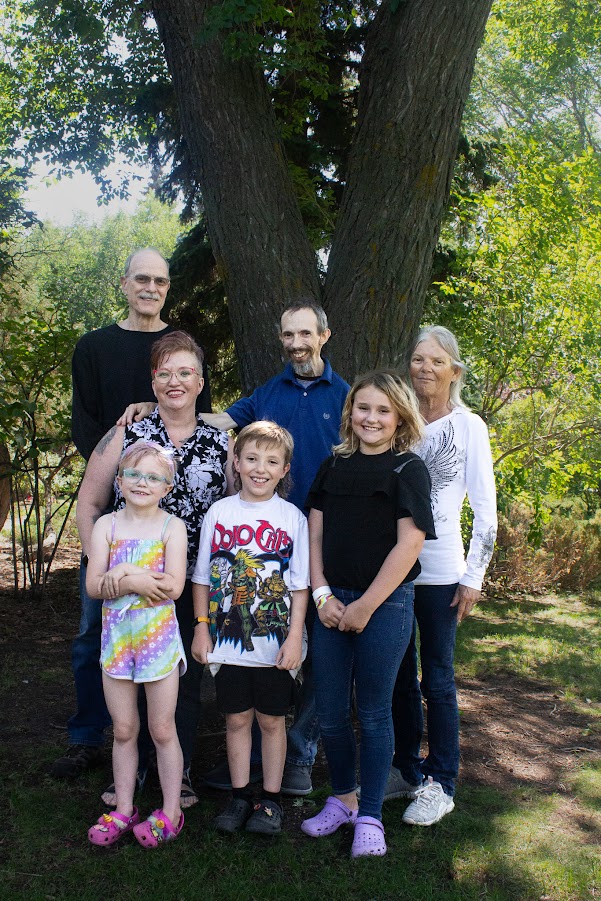
With every generation the torch is passed on. The torch is the light, the life, and the love our ancestors fought for, and now it is in the hands of Patience, Daniel, and Faith.
 Watch: The Lakeman Branch of Our Family · 1 h 27 m
The Lakeman branch on film — the polder-to-Calgary story, told by the family itself. From the family’s channel, Drifting Splash VIV.
The Lakeman descent
- The first Lakeman on a clear, datable parish entry — baptized in the Beemster Reformed Church c. 1698
- Almost certainly a son of the elder Sijmon of the 1673 register entry, the family’s first anchor on the drained lakebed
- Above him, the cloth-trade silhouettes — de Lakenman, the cloth-man — rest speculative, back to Jan Pietersz around 1600
- Mixed dairy-and-grain polder farming: butter and cheese for the Purmerend markets, and the unpaid schouwdagen owed to the dikes
- Baptized Beemster 3 November 1720; lived his whole life within sight of the polder where he was baptized
- Guurtje’s Hoogetoorn family gave steady service on the heemraadschappen — the boards that managed the dikes and canals
- Died November 1777; his son Sijmon, twenty-one, took over the farm
- Eighty years across four reinventions of the country — Republic, Batavian client state, Napoleon’s annexation, the new Kingdom
- In 1811, by Napoleonic decree, the patronymics ended — the family formally became Lakeman on the civil register
- Lijsbeth died in 1826; Sijmon remarried Immetje Pronk in 1827, with no further children
- Died 8 September 1836, buried in the parish grounds at Beets
- His baptism at Beets, 23 August 1783, survives in scan — one of the most solid pieces of the early record
- A pachter — tenant farmer — at Purmerend, as most Lakemans had been for generations
- Lived past 1850, long enough for the first Dutch railway to weave the polder’s butter and cheese into a national market
- Married Trijntje of Hobrede in 1842 — she was eleven years his senior
- The 1849 cholera took Trijntje and her newborn son Cornelis; Purmerend lost a quarter of its young children that wave
- The 1852 wave then took Sijmon himself, at thirty-three — arbeider, overleden, the register says flatly
- The whole line now ran through one orphaned boy of seven, placed with kin by the Weeskamer
- The orphan of 1852, born Purmerend 16 November 1845 — his 1874 marriage akte names Sijmon and Trijntje, sealing the join
- A teacher in the colonial school service — hulponderwijzer to Oost-Indisch hoofdonderwijzer by 1881
- The children’s birthplaces map the postings: Bangka’s tin coast, the Java highlands, Ternate in the spice islands
- Jacoba, born in the fishing village of Renesse, outlived him by decades — she died in the occupied Netherlands, 1942
- P.K.W. — born The Hague, 27 January 1881, on his parents’ home leave; Hague akte 368 names them outright
- Rose to burgemeester in the colonial administration of central and east Java — patrolling the whole district on horseback
- Sophia came from Franeker in Friesland, a police brigadier’s daughter
- Sailed home in 1933, nine years before the empire’s end; died in the Netherlands, 1966, aged eighty-five
- Born Soerabaja, 1 October 1918; Suzanna at Ter Aar six days earlier — a doctorate in geology carried him around the world
- Shell in Venezuela, then Calgary in 1955 with a whole contingent of ex-Shell families; BP London, Kuwait, Singapore
- Six foot three, fluent in seven languages, still climbing trees at seventy; died Calgary, 1993
- Suzanna — the tailor-barber’s daughter, a most excellent seamstress — lived to one hundred; her Verboom people have their own page
- The youngest of the three sons and the only one born in Canada
- Six foot five — the height that makes his son, at five-eleven, the short one; decades a taxi and limousine dispatcher, much of it nights
- Owes his fatherhood to a case of mistaken identity — Elizabeth asked their friend Jim for the other tall blond friend
- Schooled on three continents as the postings moved: England, Kuwait, London, Singapore
- Married 2 July 2016 in Calgary
- Thomas is the family’s archivist — keeper of the slides, the spreadsheets, and the website where these stories live
- The parents of Patience, Daniel, and Faith
- Born 2013, 2015, and 2017, all in Grande Prairie
- Heirs of all eight family lines — the confluence this whole site is built around
The Lakeman line runs out of the Beemster polder, through the Indies and a world war and two oceans, and reaches the present through one person: Thomas Martin Cheesman, born in Calgary on 4 November 1980 — Lakeman through his father, Martin Gerard Lakeman. The surname Thomas carries, Cheesman, came not from Martin but from his step-father Brian Cheesman’s family: a chosen name, not a blood one. Thomas is the family’s archivist, keeper of the slides and photographs, the family-tree spreadsheets, and the website where these stories live.
Calgary, the city he was born in, is where two sides of his own family had each arrived. The Lakeman line reached it when Rienk settled there after the war. His mother’s people came from the other direction: the Docherty line out of Ireland and industrial Lanarkshire, and the McIver, Campbell, and Cameron lines out of the Hebrides by way of a Saskatchewan crofter colony — all carried down through his mother, Elizabeth Maryanne Cheesman, born Docherty.
Thomas and Melanie Lyn Haiste married in Calgary on 2 July 2016 and are the parents of three children. Melanie carries two more lines: the Haiste line through her father, Dan Steven Haiste, and the Rycroft and Steinke lines through her mother, Lana Lyn Rycroft. So five family lines now meet in one household — Lakeman, Docherty, and Hebridean through Thomas; Haiste and Rycroft through Melanie — gathered under the chosen Cheesman name.
It passes, jointly, to the three of them:
- Patience, born in Grande Prairie on 24 September 2013
- Daniel, born in Grande Prairie on 30 June 2015
- Faith, born in Grande Prairie on 30 March 2017
What they carry is the whole of it — the polder, the Indies, a survived world war, a crossing of two oceans, and, beside the Lakeman thread, the Irish, Hebridean, Yorkshire, and Peace-Country lines that met theirs.
There is one Dutch word the family kept for what carried it through all of that: doorkomen — to come through. Patience, Daniel, and Faith inherit it. Their books are not yet written, but the world they inherit will be like no other — sure to be exciting and adventurous.
Lineage at a glance
| Generation | Name | Born | Died | Place of life | Confidence |
|---|---|---|---|---|---|
| (pre) | Jan Pietersz de Lakenman (cloth merchant/dyer) | fl. 1580–1620 | — | Edam / Purmer / Beemster | Inherited (speculative) |
| (pre) | Pieter Jansz de Lakenman (early polder settler) | c. 1600 | c. 1650 | Beemster (post-drainage) | Inherited (speculative) |
| (pre) | Sijmon Pietersz de Lakenman (cloth finisher) | c. 1620 | c. 1680 | Beemster / Edam | Inherited (notarial leads) |
| (pre) | Pieter Sijmonsz de Lakenman | c. 1650 | c. 1705 | Beemster / Purmerend | Inherited |
| (pre) | Sijmon Lakenman (polder tenant) | c. 1645 | c. 1720 | Beemster | Partly verified — 1673 Beemster baptism of daughter Trijntje |
| 1 | Sijmon Sijmonsz Lakeman (polder farmer) | c. 1698 | c. 1755 | Beemster | Verified — Beemster DTB |
| 2 | Jan Sijmensz Lakeman (polder farmer) | 1720 | 1777 | Beemster | Verified — Beemster DTB |
| 3 | Sijmon Jansz Lakeman (polder farmer) | 1756 | 1836 | Beemster / Beets | Verified — Beemster DTB; Zeevang index (transitional surname era) |
| 4 | Pieter Sijmonsz Lakeman (tenant farmer, pachter) | 1783 | after 1850 | Beets / Purmerend | Verified — Beets baptism scan, 23 Aug 1783 |
| 5 | Sijmon Lakeman (labourer) | 1819 | 1852 | Purmerend | Verified — Purmerend civil registers (died in the 1852 cholera epidemic) |
| 6 | Pieter Lakeman (colonial schoolteacher; first emigrant) | 16 Nov 1845 | after 1900 | Purmerend → Dutch East Indies → Netherlands | Verified — Zierikzee marriage 1874 (parents Sijmon Lakeman & Trijntje Tergand); son’s 1881 Hague birth akte |
| 7 | Pieter Karel Willem Lakeman (colonial administrator; burgemeester) | 27 Jan 1881 | 1966 | The Hague → Dutch East Indies → Netherlands | Verified — Hague birth akte 368 (parents Pieter Lakeman & Jacoba Leunis) |
| 8 | Rienk Lakeman Sr. (geologist, Shell then BP) | 1918 | 1993 | Soerabaja → Netherlands → Venezuela → Calgary → London → Kuwait → Singapore → Calgary | Verified / Living memory |
| 9 | Martin Gerard Lakeman | 1957 | — | Calgary | Living memory |
| 10 | Thomas Martin Cheesman (Lakeman) (family archivist) | 1980 | — | Calgary | Living memory |
| 11 | Patience | — | — | Grande Prairie | Living memory |
| 11 | Daniel | — | — | Grande Prairie | Living memory |
| 11 | Faith | — | — | Grande Prairie | Living memory |
Confidence tiers: Verified — anchored to at least one primary register (DTB parish book, civil register, colonial service or government record). Partly verified — one anchor point against an otherwise inferred generation. Inherited — rests on family genealogy and circumstantial inference without primary verification yet. Living memory — recent enough to be remembered directly by family.
Side-branches named in the records but off the direct line: Jan Sijmensz’s other children in the Beemster registers — Guurtje (1751), Willempje (1753), Gijsbert (1764), Aagje (1769), and Cornelis (1775); Sijmon Jansz’s other sons — Jan (1780), Klaas (1781), Sijmen (1784), Louweris (1786), and Simon (1787); Pieter Sijmonsz’s other children — Adriaan (c. 1806), Geertje (1808), Trijntje (c. 1822), and Claes (c. 1825); Pieter the emigrant’s other children, born across the Indies — Leonardus (b. c. 1877, Muntok), Geertruda (b. c. 1880, Ternate), Catharina Wilhelmina Jacoba (b. 1879, Malang; twice-widowed, d. Hilversum 1960), and Jacoba Helena (b. 1888, Pasoeroean); P.K.W.’s second son Pieter — a medical doctor in the Netherlands, with two daughters — alongside the direct line through Rienk; Rienk’s other two sons, Rienk Jr. (an engineer who worked abroad) and Alexander “Lex,” alongside the direct line through Martin; and the deep polder households whose many children fill the Beemster DTB registers. Four centuries of doorkomen — patching the dikes, crossing the water, coming through — come to rest at the foot of this table, in three Grande Prairie children who carry the Lakeman line alongside the seven others, under the chosen Cheesman name.
Notes on the records
The Dutch keep good records. The DTB registers (Doop-, Trouw- en Begraafboeken — the baptism, marriage, and burial books of the Reformed Church), and the civil registration that Napoleon imposed in 1811, are among the best-preserved in Europe, and much of the Lakeman material is now digitised and indexed across the Dutch archival platforms. That is why the heart of this story can be told with real confidence — and why the parts that aren’t yet proven can be named precisely.
The verified spine
The middle of this story is now anchored to primary civil records, and the join that matters most — the one connecting the nineteenth-century polder family to the colonial administrator’s branch — is proven, not inferred:
- P.K.W. Lakeman’s birth, The Hague, 27 January 1881 (Haags Gemeentearchief, BS Geboorte, akte 368), names his parents as Pieter Lakeman, an Oost-Indisch hoofdonderwijzer (East Indies head teacher) on leave, and Jacoba Leunis.
- Pieter and Jacoba’s marriage, Zierikzee, 5 August 1874 (Zeeuws Archief, akte 33), gives Pieter as born 16 November 1845 in Purmerend, son of Sijmon Lakeman and Trijntje Tergand — the same cholera-struck couple of Chapter Six. So the line Sijmon (d. 1852) → the orphan Pieter (b. 1845) → P.K.W. (b. 1881) is sealed by two independent civil records.
- Sophia Timmermans, P.K.W.’s wife, is confirmed by her 1955 Bennebroek death record as the daughter of Gerardus Johannes Timmermans (a police brigadier) and Riemke de Vries, of Franeker, Friesland.
- Pieter’s son Leonardus, born Muntok (Bangka) c. 1877, appears in his own 1903 Amsterdam marriage as an onderwijzer — confirming the family’s presence in the Indies by the late 1870s and the teaching trade running through it.
The seam still open
One genuine gap remains, and the story does not paper over it: the deep Beemster chain before 1845. The link from Sijmon (b. 1819) back through the eighteenth-century polder farmers to the 1673 Beemster baptism of Trijntje, daughter of Sijmon Lakenman, rests on strong name-and-place continuity and family-tree compilations, but each generational link has not yet been imaged from the DTB and civil registers. Treat Chapters One through Five as probable, by onomastic and geographic continuity — believed and consistent, but not yet sealed the way the post-1845 generations now are.
(Suzanna Verboom’s own ancestry — the Ter Aar tailor-barbers and their river-village and island roots — is documented separately on the Verboom page, with its own records and notes.)
Records that would close the remaining gaps
- Pieter Lakeman’s own birth record, Purmerend, 16 Nov 1845 (Noord-Hollands Archief) — to confirm Sijmon and Trijntje as his parents from his own register, not only his marriage.
- The Beemster DTB and Purmerend civil registers for the 1673→1845 links (Noord-Hollands Archief) — to turn the deep polder chain from probable to verified.
- Colonial education / personnel files for Pieter and administrative files for P.K.W. (Nationaal Archief, The Hague; Regeeringsalmanak voor Nederlandsch-Indië) — for the exact postings, schools, and dates.
The Canadian generations — Rienk’s postwar career onward — rest on Canadian records and living family memory.
In short: the spine is now proven by record from the cholera household forward; the polder generations above it remain probable, awaiting the parish books that would seal them.
Last updated
Download this story as a keepsake PDF
Next line → The Verbooms — family line 05 of 08