An eight-generation story, from a Gaelic surname on the cold edge of Donegal — Ó Dochartaigh — through the coal-and-iron belt of industrial Lanarkshire, across the Atlantic, and down at last into a small Alberta town called Alix and a city called Calgary. It is one of the oldest of the lines that meet in Thomas Cheesman’s children, and one of the hardest to see clearly, because for most of its length it was written down by no one who loved the people in it.
PrologueThe thin thread
Ireland → Scotland → Alberta · c. 1750 to today
Some family lines come down to us thick with paper. There are baptismal registers in careful clerical hand, parish marriage entries, gravestones, wills, photographs with names pencilled on the back. You can almost hear those ancestors breathing.
The Docherty line is not like that. For long stretches of it — the Irish years, the early Scottish years — there is almost nothing. No baptism we can read. No photograph. No letter. The people who carried this name were, for most of two centuries, exactly the kind of people that history does not write down: the poor, the Irish, the labourers in the coal pits and the iron foundries and the cotton mills, the ones who arrived with nothing and were counted, when they were counted at all, only as a number in a census column or a name misspelled by a clerk who had never heard it before.
So the most honest thing that can be said at the start is this: most of this story rests on what the family itself remembered and wrote into its own tree, not on records pulled from the archives. Until two small Scottish death certificates are finally read, its Irish-and-Scottish half stands on a thread: probable and inherited, but not yet proven.
There is a word in the Lowland Scots this family would have spoken in the streets of Johnstone and Hamilton and Ayr long before they ever saw Canada, and the word is thole. To thole is to bear a thing under load without breaking; to endure a weight that has no end in sight, the way you endure a long winter or a hard year underground. It is a heavier word than suffer, and a more stubborn one than survive. It is the truest word for this family, because the Dochertys were never the loud kind of survivors. They carried what came — the crossing, the coal, the prairie, the buried children — and did not break under it. They tholed. And they came through.
This is their story, told as truly as the thin thread allows.
Chapter OneJohn and Mary to Thomas Dougharty (c. 1750s–1899) — Donegal, the coalfield, and the branch that broke for America
c. 1750s–1899 · Donegal → Renfrewshire → Lanarkshire → Ayr → Mercer County, Illinois
At the very bottom of the tree there are two names with no dates beside them at all: John Docherty and a woman recorded only as Mary — listed as the parents of John Edward Docherty, born in 1780, which would put their own births somewhere around the 1750s. We do not know where they lived, what they did, or whether they existed as named here rather than as a tree-builder’s reasonable guess.
What we can say is what their world almost certainly was. The surname — Docherty, Doherty, Dougharty, the clerks never agreed — comes from the Irish Ó Dochartaigh, overwhelmingly a clan of one place: the Inishowen peninsula in the far north of County Donegal, where the old Gaelic order broke after the failed rebellion of 1608 and its lords became, over a few hard generations, tenants, and then poor. Read like a fingerprint — a strong likelihood, not a proof — the name makes John and Mary Inishowen people: poor, of the land, on the cold, rain-flayed edge of Ireland. Everything after — the crossing, the pits, the prairie — is the long story of their descendants climbing up off that floor. They are the dark water this whole family rises from. Learn more about County Donegal →
With John Edward Docherty, the thread becomes something we can almost hold. He was born, the family record says, in 1780, in Ireland — and he died in 1862 in Johnstone, Renfrewshire, Scotland. Eighty-two years, and somewhere in the middle of them, a crossing.
He was a young man during the 1798 Rising, crushed with a brutality that scarred Ulster for a generation; he lived through the Act of Union; and he was around sixty when the Great Famine came — An Gorta Mór — when a million people died, a million more fled, and Ireland’s population fell by a quarter and never recovered. Learn more about the Great Famine →
But by the Famine years, John Edward was already gone. We know this because he died in Scotland, and his wife’s family, the McGeoghans, were settled in Renfrewshire by the 1780s. Which raises one of this story’s real unresolved questions: who was the immigrant? Did John Edward cross from Ireland as a young man and marry into a McGeoghan family already established in Scotland, or had the Dochertys themselves been in Renfrewshire longer than we think? We do not yet know. The single document that could settle it — his 1862 Johnstone death certificate, which under Scottish law would name his parents and perhaps the Irish townland they came from — sits unread, the most valuable unpulled record in this whole branch.
That timing may be why the line survived at all. Inishowen — poor, crowded, potato-dependent — was the kind of place the Famine fell hardest on; whatever Dochertys remained there when John Edward had gone, it came for them. The family that reached Canada did so in part because its leading edge had already crossed the water before the worst of it.
Even before the Famine, the Irish were crossing the narrow water to industrial Scotland in their tens of thousands — a short, cheap passage from Derry or Belfast to the Clyde, into mills and pits and ironworks hungry for cheap labour. Most of that migration was Catholic; a substantial Protestant stream crossed in the same boats, and, sharing the Presbyterian faith of the country it came to, could blend into Lowland life rather than into a walled-off slum. This is the stream the Dochertys belong to.
He married Mary McGeoghan, also recorded as Nancy, born about 1786 in Renfrewshire, who died in 1856. The surname McGeoghan (Mag Eochagáin) is itself Irish, but a midlands name, from Westmeath and Offaly rather than Donegal — which deepens the puzzle of how a Donegal Docherty and a midlands-rooted McGeoghan family met and married in Lowland Scotland. It is the kind of mixing the great migration produced: Irish people from opposite ends of Ireland, thrown together in the Scottish industrial towns, marrying across distances they’d never have crossed at home.
They settled in Johnstone, a weaving and milling town in Renfrewshire just west of Paisley — a planned industrial town of cotton mills, flax, thread, and coal pits opening in the surrounding fields, drawing exactly the labour John Edward had to sell. We do not yet know his trade; he may have been a weaver, a labourer, a collier. Mary died in 1856, John Edward six years later in 1862. They lie somewhere in Renfrewshire ground — an Irish couple who had crossed a sea and made a family stick in a new country, the first firm link in a chain that would reach, four generations later and half a world away, to a household on the Alberta prairie.
Here the spelling begins to slide. The son who carries the line forward is recorded as Peter Dougharty — Dougharty, not Docherty, because the clerks wrote down what they heard, and what they heard from an Irish mouth in a Scottish town they spelled a dozen different ways. Within this one family, in a single generation, the same name appears as Docherty, Dougharty, Doherty. We follow the spelling the records use and trust that the blood runs underneath it.
Peter was born about 1801, in Ireland — which is itself a clue, and a complication. If John Edward was already in Scotland by the time he raised his family, why was Peter born in Ireland? Either John Edward came over later than the tree suggests, or the family moved back and forth across the water the way migrant labourers often did, following the work. There is also a tantalising, unconfirmed note in the tree: that Peter had a brother, Patrick Andrew Docherty, also born in Ireland around 1801, who died in 1871. Twins? The tree raises the question and cannot answer it.
Peter died on 3 October 1865, in Hamilton, Lanarkshire. And in that single line of fact — born in Ireland around 1801, died in Hamilton in 1865 — you can read the whole migration of his generation. He moved east, out of the Renfrewshire weaving country and deeper into Lanarkshire, which by the middle of the nineteenth century was the black, roaring engine room of the British Empire’s iron and coal.
This is the world that made the next three generations of this family. The Lanarkshire coalfield and the ironworks along the Clyde valley — Hamilton, Bothwell, Bellshill, Coatbridge — were, in Peter’s lifetime, among the most intense concentrations of heavy industry on earth. Coatbridge at night was said to glow red for miles; a visitor wrote that it looked like the mouth of hell. Learn more about the Lanarkshire coalfield → The pits went down hundreds of feet, and the work ate men. And the labour that did it was, in enormous part, Irish. The Catholic majority were resented for it; the Protestant Irish, the Dochertys among them, lived in the same hard pit villages and did the same dangerous work, but carried one fewer mark against them and slipped more readily into the Scottish working class — part of why the family kept moving, rather than settling for good into a walled-off enclave.
Peter’s wife is recorded as Mary Catherine — and here the family turns out to be more Scottish, already, than the surname alone would suggest. She was born on 8 November 1801 not in Ireland but in Govan, Glasgow; so too was Peter’s own mother, Mary (or Nancy) McGeoghan, born in Renfrewshire in 1786. In this generation the Irish thread runs entirely through the men, John Edward and Peter, both Ireland-born, while the women they married were Scottish-born already. Mary Catherine is thought to have died about 1857 in Bellshill, one of the Lanarkshire coal villages, which places the family in the heart of the coalfield by the 1850s.
No document records what Peter did for his living, but the geography answers it almost as well as one would. A man born poor and Irish who moved his family into Hamilton and Bellshill in the 1840s and 1850s went there for one reason: the pits and the iron. He almost certainly spent his working life in or around the Lanarkshire mines and ironworks, and he died in Hamilton in 1865 having carried his family one long step deeper into industrial Scotland than his father had.
Peter’s son Thomas Dougharty was born about 1 January 1835 in Ayr, on the Ayrshire coast southwest of Glasgow — and with him, for the first time in this story, we have a Docherty born in Scotland. The family that crossed the water as Irish poor was becoming, generation by generation, Scottish: Scots-born, Scots-speaking, Scots in everything but the surname and the still-fresh memory of Ireland.
Thomas was one of several children, with a brother, James Dougharty (born 1831–32 in Ayr), and a sister, Margaret (born 1838 in Ayr). Ayr in the 1830s was a county town and seaport — coal, weaving, harbour trade — and the Doughartys were there as part of the same restless following of work that had moved them out of Ireland and across Scotland. That the children were born in Ayr while the next generation surfaces in the Hamilton/Bothwell coalfield tells us the family kept circulating through the industrial belt, wherever a man could get taken on.
Thomas married Katherine Brown, born in March 1835 in Faskine, Lanarkshire — a colliery district near Airdrie and Coatbridge. Katherine was, in other words, a coalfield woman, the daughter of the pits, and her marriage to Thomas is a marriage entirely inside the industrial Scotland this family then belonged to. But Thomas’s life did not end in Scotland. Sometime in the 1890s he and Katherine joined the great migration across the Atlantic — not to Canada but to the United States, to Mercer County, Illinois, where Dochertys were settling in the farm country south of Moline. Thomas died there on 13 April 1899 and was buried in Mercer County, a Lanarkshire collier laid to rest in American soil. It was this move, in the parents’ generation, that first carried the family out of Scotland, setting the stage for his son Robert’s own journey on to the Canadian prairie.
And in Thomas’s generation the family did something it had not done before: it split across an ocean. His sister Margaret — Margaret Watson, born Dougharty in Ayr in 1838 — died not in Scotland but in Cable, Illinois, and around her a whole second Docherty world appears in the records of Mercer County, the farm townships southwest of Moline and Rock Island. The standard 1882 History of Mercer County, Illinois contains not one mention of the name in any spelling — so the family either arrived after 1882 or lived beneath the notice of the men who wrote county histories, as poor recent immigrants usually did. One branch became Illinois farmers; the central line stayed in Scotland one more generation and then leapt for the Canadian prairie — though the two would brush against each other again. But that is the next chapter’s story.
Chapter TwoRobert Docherty (1872–1959) — the emigrant, the homestead, and the German-American widow
1872–1959 · Hamilton → Illinois → Alberta
Now the story finds its hinge: the man who took this family out of Scotland for good and planted it in the Canadian West. He is the great-grandfather, Robert Docherty, and his is the first life in this whole line we can see in something like full colour, because it ends recently enough that records and family memory begin, finally, to overlap.
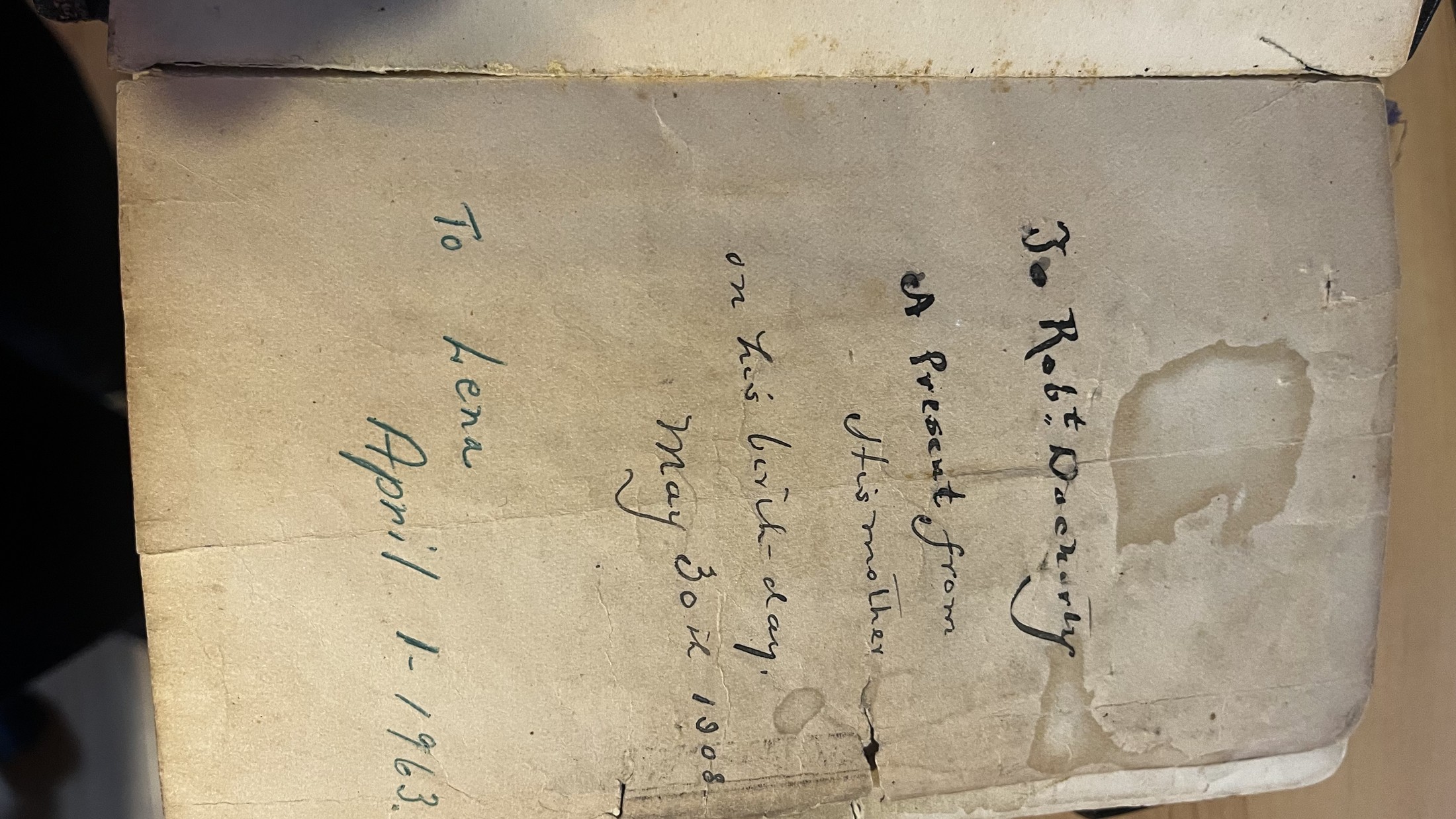
Robert was born on 30 May 1872 in Hamilton, Lanarkshire — in the heart of the coal-and-iron country, into the same industrial Scotland that had held his father and grandfather. The tree records a whole crowd of siblings born across Bothwell and Hamilton through the 1850s, 60s, and 70s — Peter, Thomas, John, James, Catherine, Margaret, and Jane. A boy born in a Hamilton coal town in 1872 had a future mapped out for him before he could walk: down the pit, like his father and his father’s father, for as long as his body held.
Robert did not take that future. He did what the boldest of his generation did — he left. He crossed the Atlantic, and instead of trading one industrial city for another, he went all the way out to the open prairie of central Alberta, to a small town called Alix — a railway-and-farming settlement east of Red Deer, on the parkland being thrown open to homesteaders in the years around 1900.
This was the great age of the prairie boom. After 1896 the Canadian government advertised the West across Britain and Europe as “the Last Best West,” the last great reserve of free farmland on the continent, and they came in their hundreds of thousands, the trains running west out of the eastern ports crammed with families and their crates. The pull was always the same: a hundred and sixty acres of your own, free but for a ten-dollar filing fee and the requirement that you live on it, build on it, and break a set acreage of sod within three years to “prove up.” It was advertised straight into the smoky industrial towns of Scotland, into places exactly like Hamilton, where a collier’s son might read a railway poster and decide that the rest of his life did not have to look like his father’s.
For a man whose family had been landless for as far back as anyone could trace — landless tenants in Ireland, landless labourers in Scotland, four generations of working other men’s ground and other men’s coal — the offer of a quarter-section of his own was the reversal of two centuries of dispossession. He took it.
Why Alberta — and why Alix? Robert did not go straight from Scotland to the prairie. He went first to the United States, to Mercer County, Illinois, the farm country south of the Mississippi mill towns, where his own father Thomas Dougharty had already settled and died, in 1899, and where a cluster of Docherty kin had put down roots. It was there, among the Illinois Dochertys, that Robert met and married a German-American widow, and it was from Illinois, not Scotland, that he and his new blended family came north to Canada in 1912, living around Medicine Hat, Red Deer, and Lamerton before settling at last near Alix. The American branch of the last chapter was no side-branch at all: it was the family’s own waystation, the middle leg of a Scotland → Illinois → Alberta migration.
Her name was Augusta Catherina Nitz, born on 24 September 1876 in Coal Valley, Rock Island County, Illinois — in the same corner of Illinois where Robert’s own family had by then settled. She was the daughter of Herman Leopold Nitz and Lena (Kroeger) Nitz, German immigrants: the Nitzes out of Kreis Schwetz in what was then West Prussia, the Kroegers out of Puls in Schleswig-Holstein — part of the enormous German migration into the American Midwest. So the Docherty line, which had been Irish and then Scottish, now took in a German-American strain, and through Augusta the children of this marriage carried Prussian and Holstein blood alongside the Donegal and the Lanarkshire.
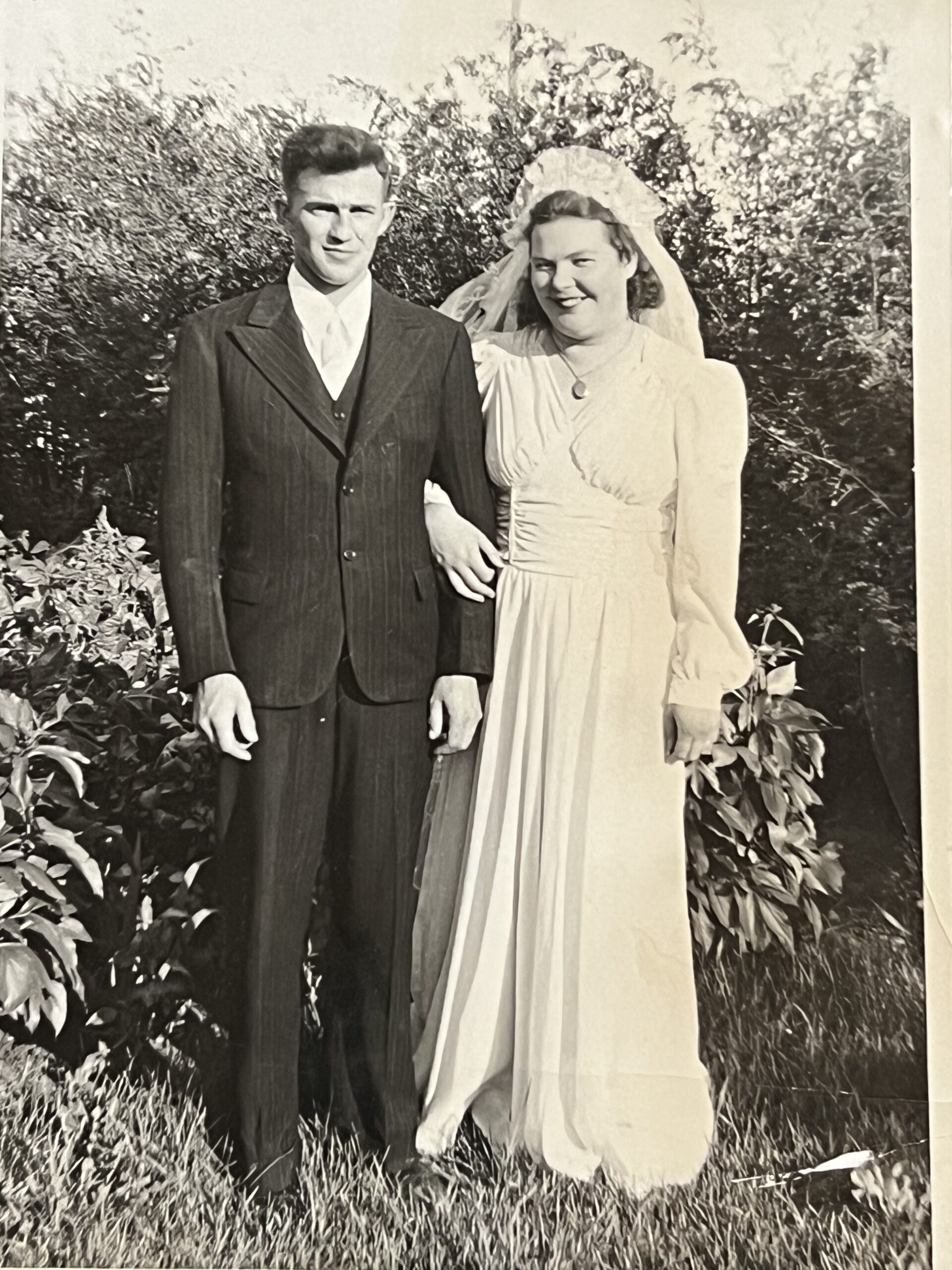
Augusta had been married before. Her first husband, whom she married at Moline in 1894, was Warren Martin Sullivan, and they had five children, the Sullivan half-siblings who appear all through the records: Warren Alfred, Martin Herman, Earl William, Emma Lovina, and Lena Elizabeth. Widowed, Augusta then married Robert Docherty on 11 July 1908, in Aledo, the county seat of Mercer County, Illinois. Out of that union came four Docherty children — Lena, Catharina Grace, Thomas Richard, and Abraham Lincoln — who grew up alongside their Sullivan half-siblings in one blended household that would, within a few years, cross the border into Alberta.
It is a very North American family that results, and you can read the whole optimism of the age in the names they gave their children. A daughter, Catharina Grace, born back in Illinois in 1909. And a son, born in Alix in 1917, given a name no Donegal tenant or Lanarkshire collier would ever have chosen, a name that announces a family pledging itself to a new country: Abraham Lincoln Docherty. From Ó Dochartaigh of Inishowen to a boy named for the American president, in five generations. That is the distance this family travelled.
Robert lived a long life on the prairie. He died on 31 August 1959 in Calgary, Alberta — eighty-seven years old, born in a Lanarkshire coal town when the telephone was still a dream and dying in a Canadian city in the year of the jet age. Augusta had gone before him, on 20 June 1944, in Alix, where she was buried in the Alix Cemetery. They are the bridge generation — the ones who carried this family across an ocean and a border and set it down, at last, on land of its own.
Chapter ThreeThomas Richard Docherty (1914–1977) — the prairie son
1914–1977 · Alix, Alberta · the prairie son
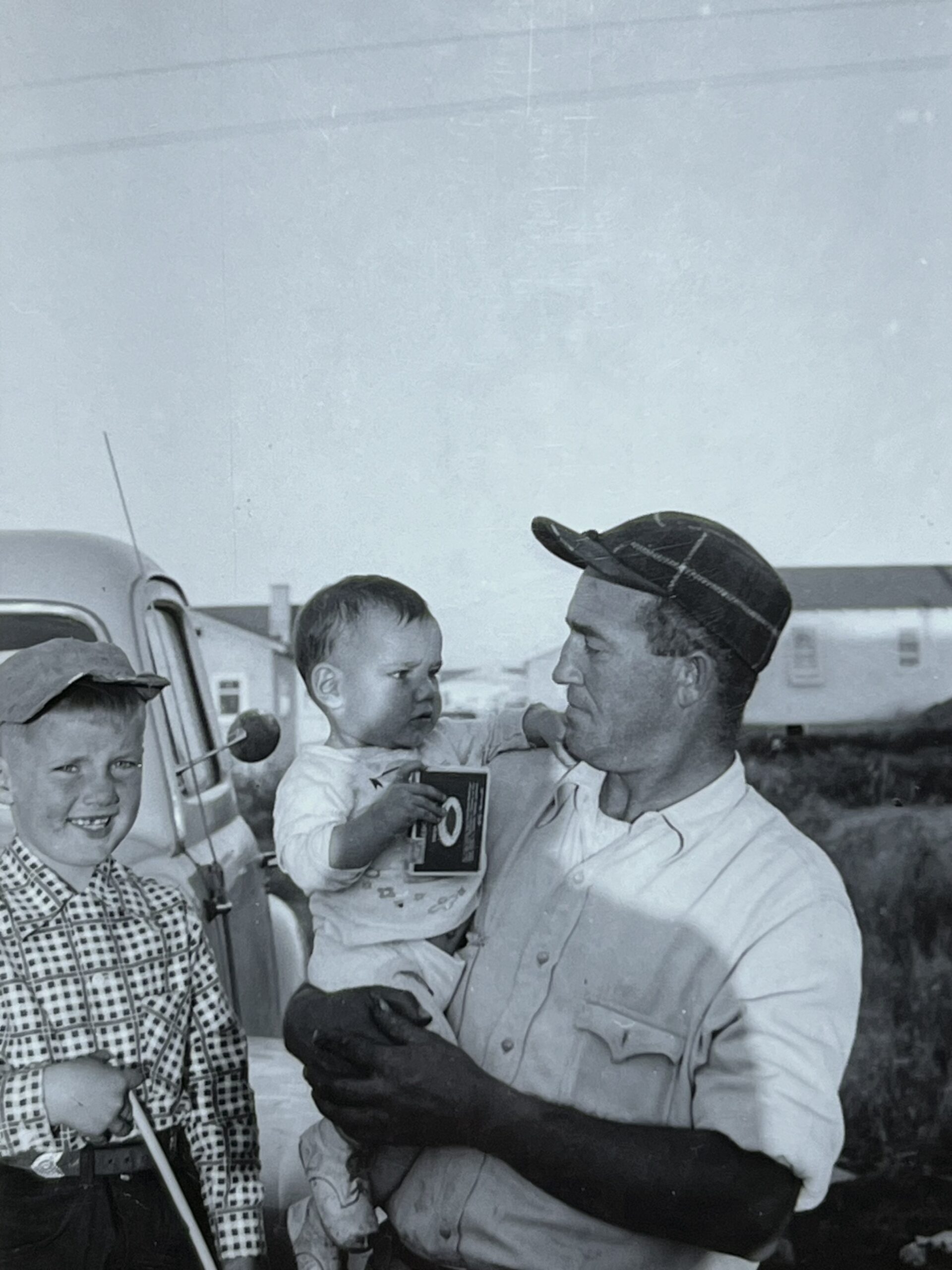
The boy through whom this line comes down to the present was Thomas Richard Docherty, born on 16 January 1914 in Alix, Alberta — a son of Robert and Augusta, born on the prairie, the first fully Canadian generation of this old Irish-Scottish family.
His was the first Docherty life lived entirely in the new country. Where his father had crossed an ocean and his grandfather and great-grandfather had gone down the Lanarkshire pits, Thomas Richard was a child of the Alberta parkland — born the year the First World War broke out, a young man through the Great Depression and the Dust Bowl that scoured the prairie in the 1930s, when the rains failed and the topsoil blew away in black clouds and the homestead dream turned, for a great many families, to dust and debt. He came of age in the hardest decade the Canadian West has known, and he came through it.
And there was a streak in him the records only hint at. Through the 1930s, the worst of the Depression, Thomas Richard was a Golden Gloves boxer, taking prize fights for the purse when a purse was hard to come by; family memory holds that he once found himself stranded in California without money and fought his way home, one bout at a time. The boxing seems to have run in the blood: there is a long-held family tale — worth chasing before anyone swears to it — that his half-sister Lena Sullivan was a niece of John L. Sullivan, the last great bare-knuckle champion. And when the Second World War came, Thomas Richard served as an anti-aircraft gunner, stationed up the Pacific coast around Prince Rupert.
His life ran its full course in and around the town where it began. He married Elizabeth Annie McIver, and with that marriage the Docherty story braids together with another whole world — one that is a great story in its own right, and has its own telling in the McIver, Campbell, and Cameron story. Elizabeth Annie was born on 20 March 1919 in Saltcoats, Saskatchewan, the daughter of a Hebridean family: McIvers of the Isle of Lewis and, through her mother Elizabeth “Lizzie” Campbell, Campbells of South Uist, Gaelic-speaking crofters cleared off the Scottish islands into a Saskatchewan colony scheme that failed by 1900. Through her, three more Scottish island lines — McIver, Campbell, and the Camerons of Moray behind them — flow into the family, and they carried their own grief: her uncle Norman George McIver, of Saltcoats, served with the 46th Battalion of the Canadian Expeditionary Force and was killed on 3 June 1917, aged twenty-six, and lies in a war cemetery in northern France. Here it is enough to say that when Thomas Richard married Elizabeth Annie, the Donegal-Irish Dochertys and the Gaelic-Hebridean McIvers became one family.
There is a quiet rhyme in that marriage. The Dochertys were Gaelic people from Ireland; the McIvers and Campbells were Gaelic people from the Scottish islands. Both came from the Gaelic edges of the British world, and both had been pushed off their ground — the Dochertys out of Donegal in the long aftermath of conquest, the Hebrideans off Lewis and South Uist by the Clearances that emptied the islands to make way for sheep. In Thomas Richard and Elizabeth Annie, two Gaelic dispossessions, one Irish, one Scottish-island, found each other in Alberta and made a home.
They raised their family in Alberta, the children clustered in the Calgary years: sons Donald Richard Docherty (born 1946), Roy Thomas Docherty (born 1951), David Norman Clark Docherty (born 1958) — and a daughter, the one through whom this line comes down to the present. Not every story is happy: Roy Thomas died young, on 30 August 1970 in Calgary, at only eighteen, a loss the family carried.
Thomas Richard himself died on 20 March 1977 in Alix — and there is something fitting in that. He was born in Alix in 1914 and he died in Alix in 1977, the prairie town his emigrant father had chosen bookending his whole life. His funeral was held at “The Little Chapel on the Corner,” with the Rev. J.L. Pottruff officiating. The Docherty journey, which had been all motion for five generations, had finally come to rest in one place long enough for a man to be born and to die in it. His grandfather had walked away from a Lanarkshire pit toward a quarter-section of his own; Thomas Richard lived out the life that quarter-section made possible.
Chapter FourElizabeth Maryanne Docherty (b. 1959) — the daughter who carries the name forward
b. 1959 · where the line turns toward the present
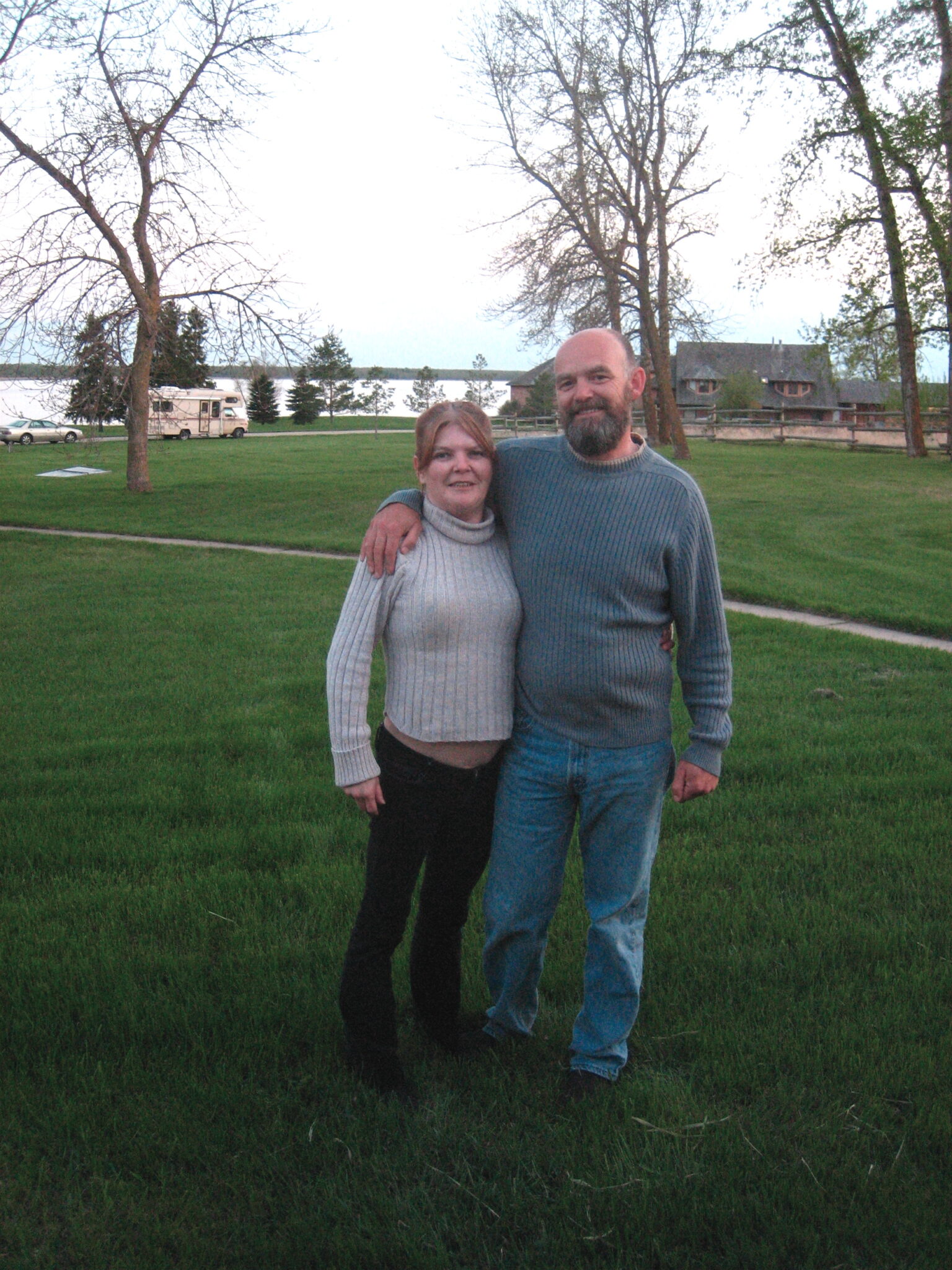
The Docherty line reaches the living present through Elizabeth Maryanne Docherty, born on 14 April 1959 in Canada — daughter of Thomas Richard Docherty and Elizabeth Annie McIver, and mother of Thomas Cheesman. Through her father she carries the Docherty inheritance; through her mother, the Hebridean — McIver of Lewis, Campbell of South Uist, Cameron of Moray.
Born in 1959, she is a child of the modern era — of postwar Alberta, of the oil years, of a Canada her homesteading grandparents would scarcely have recognised.
She spent most of her working life on her feet, serving — restaurant floors in whatever Alberta town the family was near, and later years cooking at an A&W in Calgary before she set that down. These days she works the road-construction season as a flagger, her third or fourth year of it now, and the family teases her about the raccoon look the job leaves her with: tanned dark to the line of her sunglasses, a white band across the eyes. The life seems to suit her — little stress, lots of sun, the work optional rather than mandatory, and after a career spent serving truckers and equipment operators their coffee and their suppers, she gets along easily with the same men out on the road.
She also has a way of putting her family to work. At fourteen her son was bussing tables at Trumpeters, across from the Prairie Mall, because she was serving there and got him the job; in the Valleyview years she got him hired again, bussing and washing dishes through high school — at one memorably mad little restaurant where, by the end, four of the family were working at once, and where, one day, all four walked in together and handed over a note that said only We Quit, signed by each, and walked out. There is a fair argument that the whole cooking life told elsewhere on this site began with her.
And then the line does what every line in this family does: it does not run on alone. Her son, Thomas, would carry it forward — but not by itself, and not under its own name. His father was a Lakeman; the surname Thomas would carry through life, and pass to his own children, was neither Docherty nor Lakeman but Cheesman, taken from his step-father, Brian Cheesman. The final chapter is where the lines meet.
Lineage at a glance
A quick-reference summary of the direct line, oldest to newest. The Confidence column shows how firmly each generation rests on a primary record versus the family’s own tree.
| Generation | Name | Born | Died | Place of life | Confidence |
|---|---|---|---|---|---|
| 1 | John Docherty & Mary | c. 1750s | — | Ireland (probably Donegal / Inishowen) | Inherited — names from the family tree only; no dates, no record; existence as named is a tree assertion |
| 2 | John Edward Docherty | 1780 | 1862 | Ireland → Johnstone, Renfrewshire | Probable — birth/death in the tree; Donegal origin inferred from surname; 1862 Johnstone death certificate not yet pulled |
| 2 | Mary / Nancy (McGeoghan) Docherty (wife) | 1786 | 1856 | Renfrewshire, Scotland | Probable — tree assertion; McGeoghan = Irish midlands surname; not primary-confirmed |
| 3 | Peter Dougharty | c. 1801 | 3 Oct 1865 | Ireland → Hamilton / Bellshill, Lanarkshire | Probable — son-of-John-Edward link consistent across tree; 1865 Hamilton death certificate not yet pulled |
| 3 | Mary Catherine Dougharty (wife) | c. 1801 | c. 1857 | Ireland → Bellshill, Lanarkshire | Inherited — tree assertion; Bellshill death not yet confirmed |
| 4 | Thomas Dougharty | c. 1 Jan 1835 | 13 Apr 1899 | Ayr → Lanarkshire → Mercer Co., Illinois | Probable — Ayr birth a tree assertion; died and buried in Mercer Co., Illinois (tree) — the generation that first left Scotland for America |
| 4 | Katherine (Brown) Dougharty (wife) | Mar 1835 | — | Faskine, Lanarkshire (coalfield) | Inherited — tree assertion |
| 5 | Robert Docherty | 30 May 1872 | 31 Aug 1959 | Hamilton, Lanarkshire → Mercer Co., Illinois → Alberta (Red Deer / Lamerton → Alix) → Calgary | Verified — Illinois years + 1912 crossing now confirmed on FamilySearch / Mercer County records; homestead file & 1959 Calgary records still worth pulling |
| 5 | Augusta Catherina (Nitz) Sullivan Docherty (wife) | 24 Sep 1876 | 20 Jun 1944 | Coal Valley & Mercer Co., Illinois → Alix, Alberta (bur. Alix Cemetery) | Verified — German Nitz/Kroeger origin well-attested; Docherty marriage confirmed 11 Jul 1908, Aledo, Illinois, and the Illinois/1912 record now FamilySearch-corroborated |
| 6 | Thomas Richard Docherty | 16 Jan 1914 | 20 Mar 1977 | Alix, Alberta | Verified / Living memory — within the recoverable Alberta record and family memory |
| 6 | Elizabeth Annie (McIver) Docherty (wife) | 20 Mar 1919 | 28 Apr 1988 | Saltcoats, SK → Alberta → Edmonton | Verified / Living memory — Hebridean McIver/Campbell line; well-documented |
| 7 | Elizabeth Maryanne Docherty (Thomas’s mother) | 14 Apr 1959 | — | Canada (Alberta) | Living memory |
| 8 | Thomas Cheesman | 4 Nov 1980/81 | — | Calgary, Alberta | Living memory — carries Docherty (+ McIver/Campbell/Cameron) via his mother; surname Cheesman chosen, from step-father Brian Cheesman |
| 9 | Patience | — | — | Grande Prairie, Alberta | Living memory |
| 9 | Daniel | — | — | Grande Prairie, Alberta | Living memory |
| 9 | Faith | — | — | Grande Prairie, Alberta | Living memory |
Side-branches named in the records but off the direct line: Peter’s possible twin brother Patrick Andrew Docherty (b. ~1801 Ireland, d. 1871); Thomas’s siblings James (b. 1831–32, Ayr) and Margaret Watson née Dougharty (b. 1838 Ayr, d. Cable, Illinois) — the doorway to the American branch; the Mercer County, Illinois Dochertys (Thomas B., John Kenneth, Jean Alice, James Henderson); Robert’s many Bothwell/Hamilton-born siblings; the Sullivan half-siblings Augusta brought into the household; Thomas Richard’s brother Abraham Lincoln Docherty and his Alix-country descendants; and Thomas Richard’s own children Donald Richard (“Uncle Rick”), Roy Thomas (1951–1970), and David Norman Clark Docherty (and, through David, Levi Jesse Docherty). The brothers and sisters of the Alberta generations — the nearest of them — are drawn out in the family appendix below.
Appendix: The wider familyThe brothers, the sisters, and the Alix household
For honesty’s sake, this story has followed a single thread — one child in each generation, the one through whom the line came down. But no family is a single thread, and the people in it were never only “heirs.” They were brothers and sisters in loud, crowded prairie households. Here, at last, the record is warm enough — living memory, funeral cards, a McIver family bible, and a typed descendant report kept by Thomas’s uncle David — that we can stop naming only the one who carried the line and start naming the nearest of them.
The family album & bible
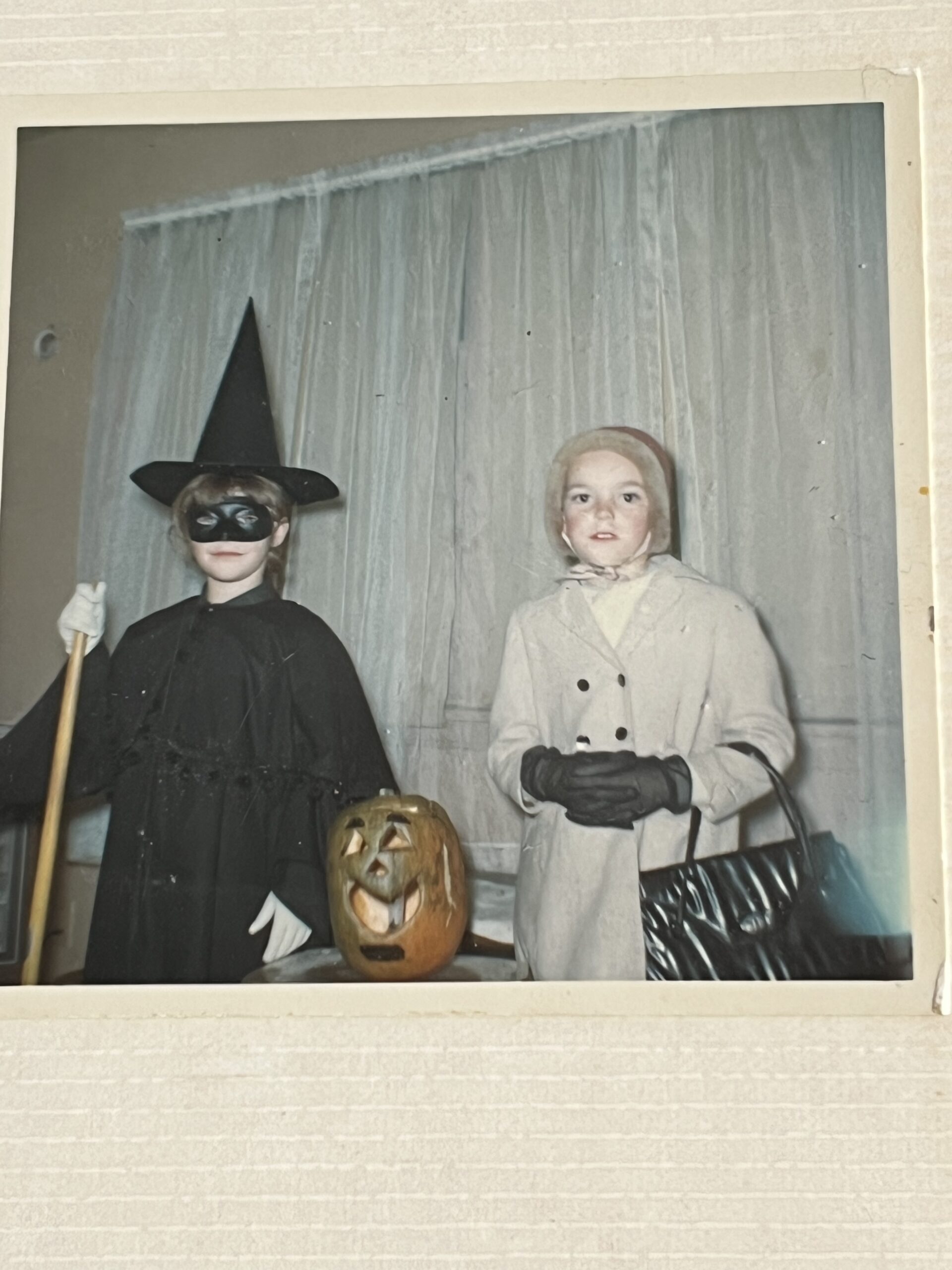
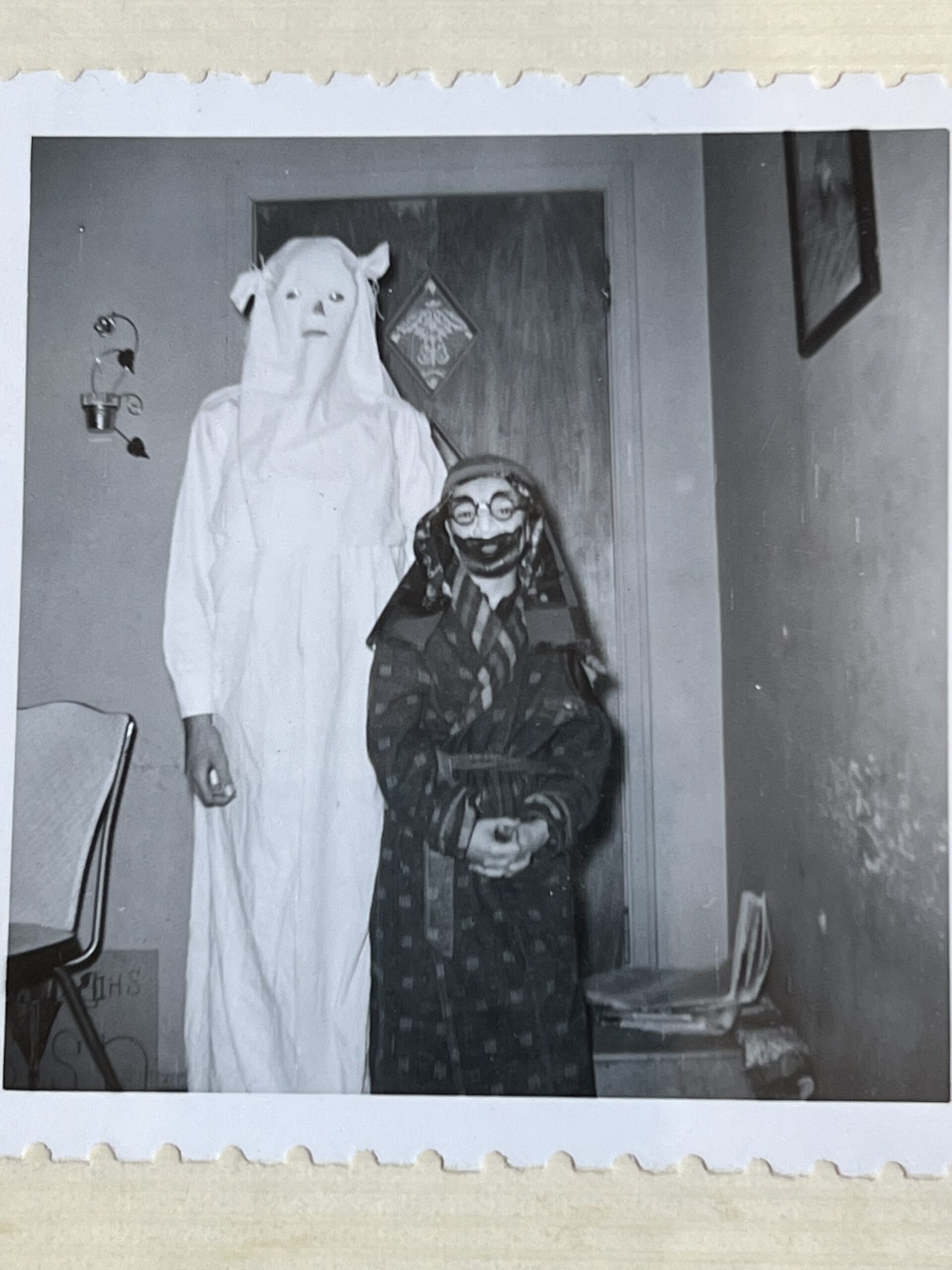
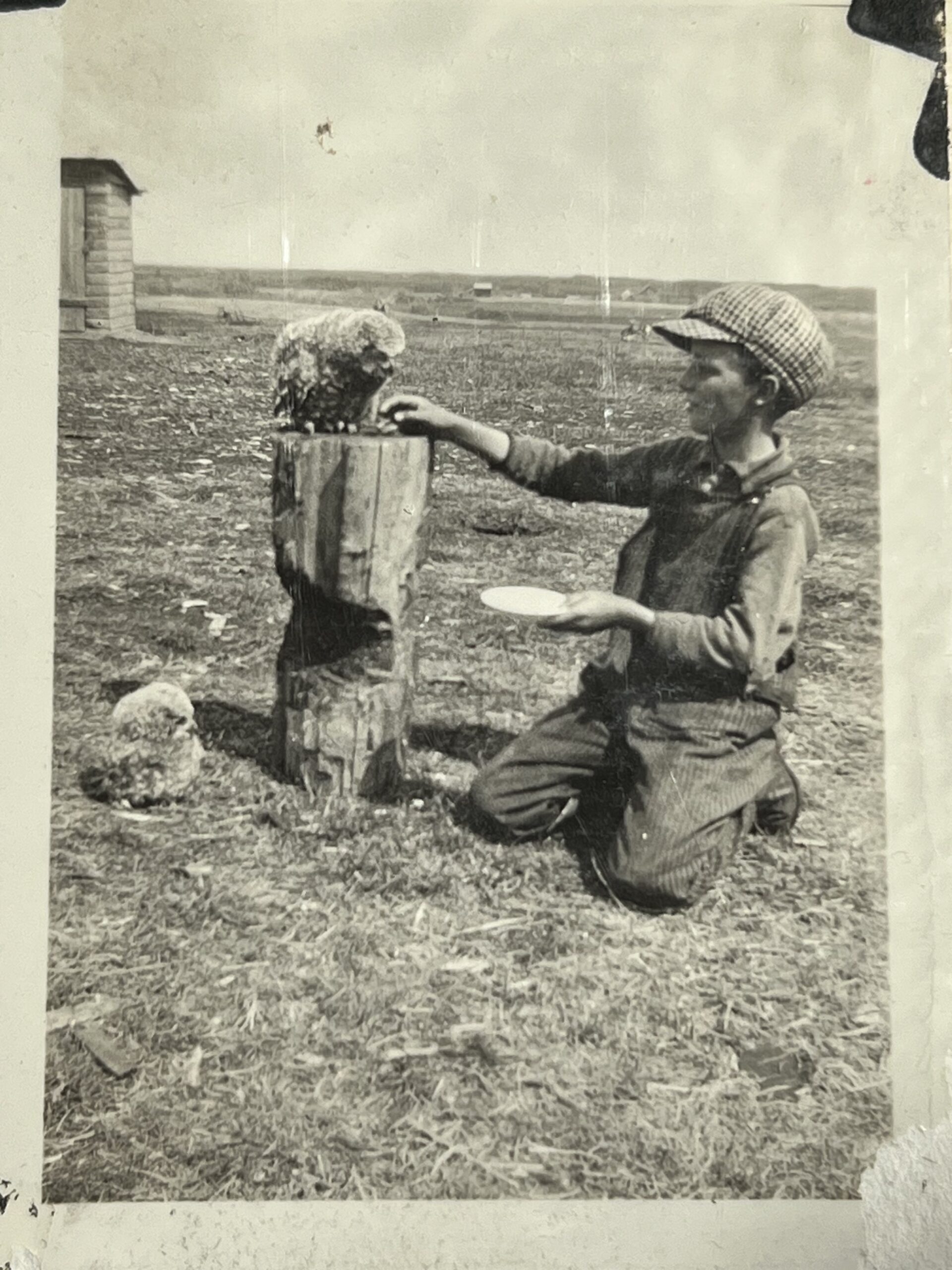
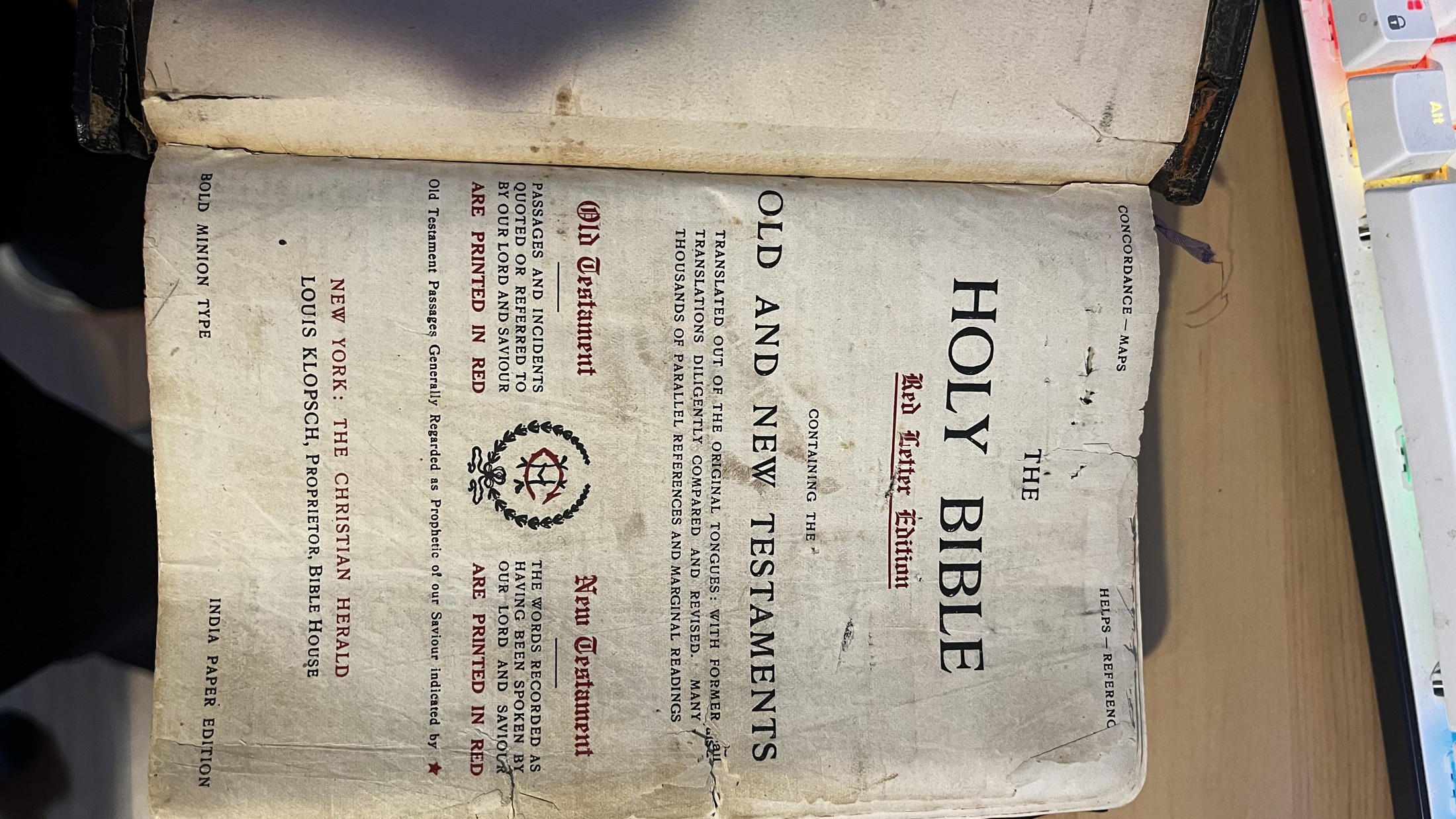
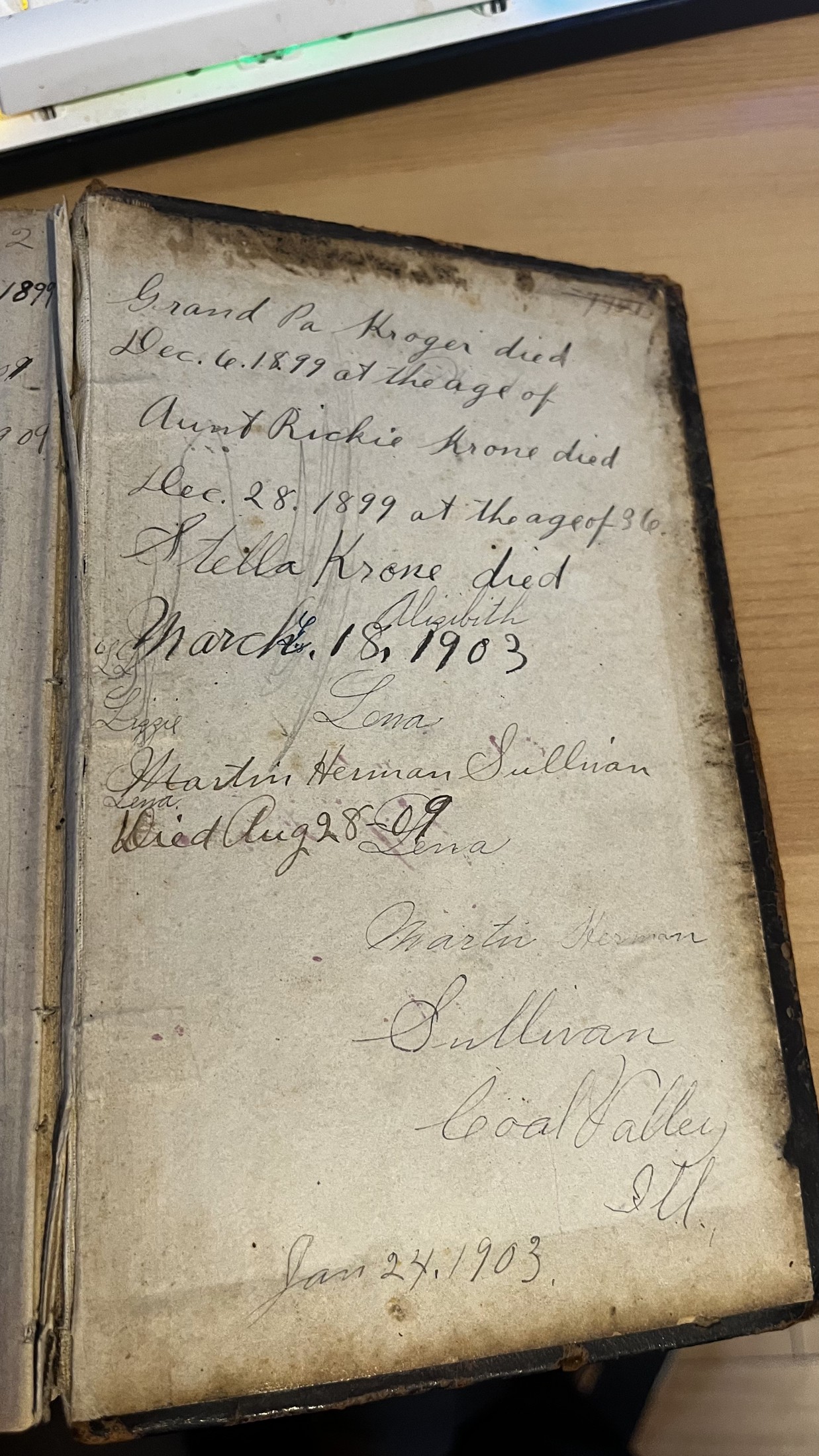
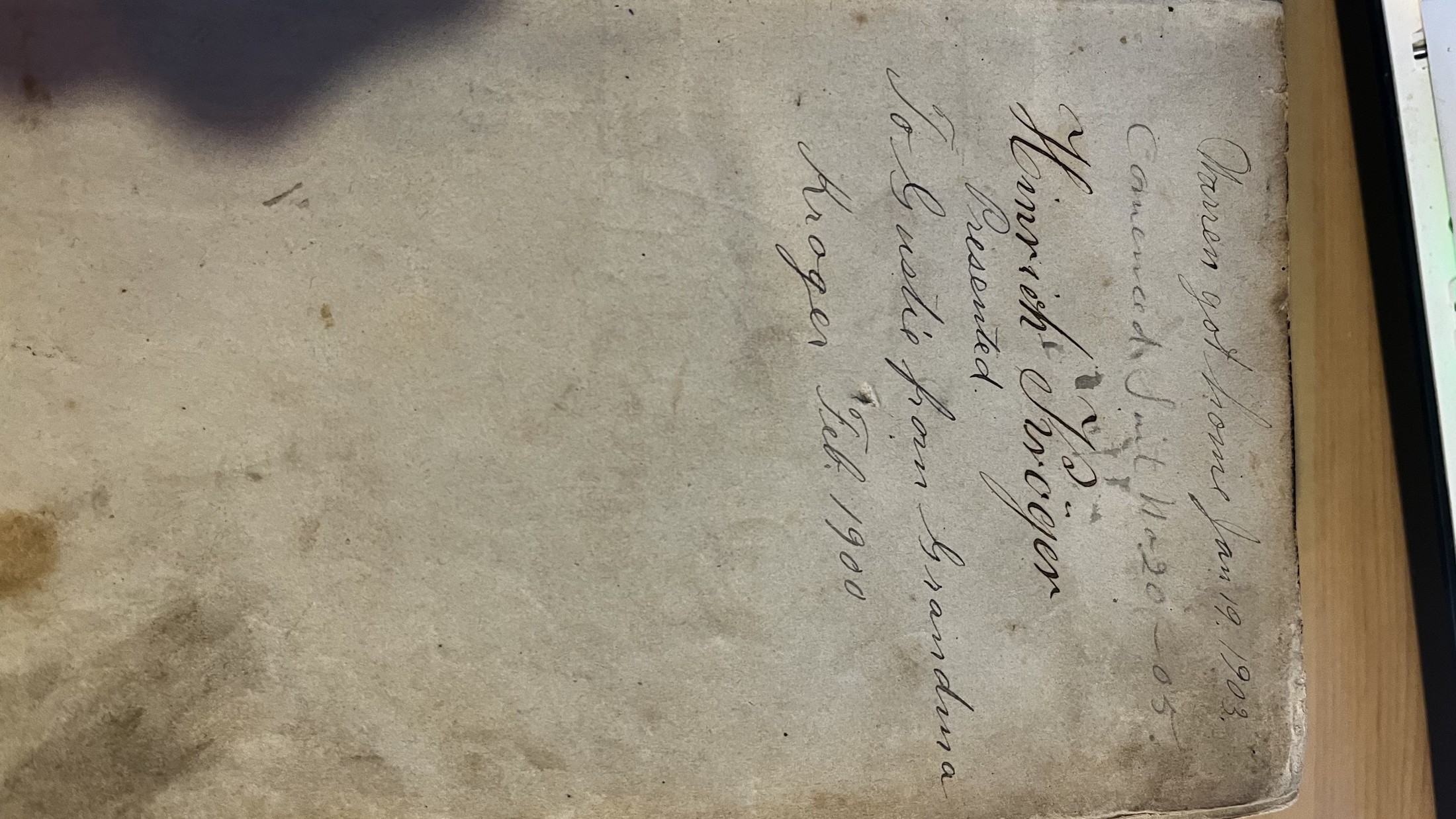
Abraham Lincoln “Abe” Docherty. Thomas Richard’s brother kept to the Alix country his whole life. He married Marjorie Evelyn Berg in 1944 and farmed in the parkland around Alix and Mirror. Abe died in 1986; Marjorie lived until 2008, and her funeral was held at Alix United Church — the same small prairie town where Robert had set the family down nearly a century before, still holding Dochertys three generations on. Abe and Marjorie’s children — Thomas Richard’s nieces and nephews, and Elizabeth Maryanne’s first cousins on the Docherty side — were Rob, Allan, Brenda, Lorne, Catherine “Cathy” (who married Lorne Conklin), and Velma, settling in time across Stettler, Erskine, Mirror, Leduc, and into British Columbia. Through Abe, the Docherty name fanned out across central Alberta, where it lives yet.
Donald Richard — “Uncle Rick.” The eldest, born in 1946. Richard became Rick, and Uncle Rick he has stayed. He married Elizabeth Ann Yaremichuk in 1973, at St Mark’s Anglican in Edmonton, and the family records carry a later marriage, to a Carol, in 1984. He has children of his own — a small Docherty cousin-branch the documents on hand do not yet name, and that only the living family can fill in.
Roy Thomas — the brother who was lost young. Born in 1951, Roy died on the 30th of August 1970, in Calgary, at only eighteen — the grief at the center of this generation, a loss his brothers and sister carried for the rest of their lives. The family’s own records hold a tender detail: that Roy came to Thomas Richard and Elizabeth Annie as an adopted infant — chosen, not born, into the family, and loved as fully as any child of the blood. (This rests on a secondary family data sheet and is set down here gently, flagged for the family’s own confirmation.)
Of the other two of the four, David Norman Clark — “Uncle Dave,” who married Laura Elaine Knutson in 1983 and whose son Levi Jesse Docherty is one of the few in his generation to carry the surname forward — went west with the line to British Columbia; and the youngest, Elizabeth Maryanne, is the one through whom it all comes down (Chapter Four).
| Relation to Thomas | Name | Dates | Notes | Confidence |
|---|---|---|---|---|
| Grandfather’s brother | Abraham Lincoln “Abe” Docherty | 1917 – 1986 | m. Marjorie Evelyn Berg (1944); farmed Alix/Mirror; children Rob, Allan, Brenda, Lorne, Cathy (m. L. Conklin), Velma | Verified — obituary + tree |
| Mother’s brother | Donald Richard “Rick” Docherty | b. 1946 | m. Elizabeth Ann Yaremichuk (1973); a later marriage to Carol (1984); his children not yet recorded | Living memory |
| Mother’s brother | Roy Thomas Docherty | 1951 – 1970 | d. Calgary, age 18; family records note an infant adoption (flagged) | Living memory |
The Living LineWhere the Docherty river joins the others
Calgary · Grande Prairie · the confluence
Every long family story has a moment when it stops being history and becomes the present. For the Dochertys, that moment is now.
The Docherty descent
- Two names with no dates at all — the speculative floor of the family’s memory, from the tree alone
- The surname Ó Dochartaigh reads like a fingerprint: overwhelmingly a clan of Inishowen, Donegal — a strong likelihood, not a proof
- Poor and of the land — tenants on the rocky, rain-flayed ground of Ireland’s far north
- Born in Ireland, 1780; died Johnstone, 1862 — the man who crossed the water
- Part of the pre-Famine Irish crossing into industrial Scotland, in the Protestant stream that could blend into Lowland life
- Mary — also recorded Nancy — was Renfrewshire-born, 1786, of an Irish-midlands McGeoghan family
- The spelling slides here — Docherty, Dougharty, Doherty — the clerks wrote what they heard
- Born in Ireland c. 1801; died Hamilton, Lanarkshire, 3 October 1865, deep in the coal-and-iron belt
- Mary Catherine was Govan-born, 1801 — in this generation the Irish thread runs through the men alone
- His 1865 Hamilton death certificate is the second key record still waiting to be read
- The first of this line born in Scotland — Ayr, c. 1 January 1835
- Married Katherine Brown of Faskine, a daughter of the Lanarkshire coalfield
- Took the family across the Atlantic in the 1890s — to Mercer County, Illinois, not Canada
- Died 13 April 1899, buried in Mercer County — a Lanarkshire collier laid to rest in American soil
- Born Hamilton 30 May 1872; walked away from the pits, through Illinois, to the prairie at Alix, Alberta
- Married the widowed Augusta at Aledo, 11 July 1908 — she brought five Sullivan children to the blended household
- The family crossed into Canada in 1912 — the Illinois years and the crossing now FamilySearch-corroborated
- Augusta died at Alix, 1944; Robert in Calgary, 1959, aged eighty-seven — the bridge generation
- Born 16 January 1914 in Alix and died there in 1977 — the first fully Canadian generation
- A Golden Gloves boxer through the Depression — family memory says he prize-fought his way home from California
- An anti-aircraft gunner at Prince Rupert in the Second World War
- Married Elizabeth Annie McIver — the Hebridean McIver, Campbell, and Cameron lines join here
- Roy Thomas was lost young — Calgary, 1970, at only eighteen
- The youngest of the four — Docherty through her father, the Hebridean lines through her mother
- A serving life: restaurant floors across Alberta, later an A&W kitchen in Calgary; now she flags the road-construction season
- Got her son his first restaurant job at fourteen — there’s a fair argument the whole cooking life began with her
- Married 2 July 2016 in Calgary — the city where Robert’s road had ended is where theirs began
- The parents of Patience, Daniel, and Faith
- Born 2013, 2015, and 2017, all in Grande Prairie
- Heirs of all eight family lines — the confluence this whole site is built around
The Docherty line comes down through Elizabeth Maryanne Docherty to her son, Thomas Cheesman, born in Calgary on the 4th of November. In Thomas, the two halves of his own blood meet: the Lakeman line through his father, Martin Gerard Lakeman, and the Docherty line — together with the McIver, Campbell, and Cameron Hebridean lines carried through his grandmother Elizabeth Annie — through his mother. Calgary, where his great-grandfather Robert had died, is where they met.
But Thomas is not the end of the line, and the Dochertys are not a line at all in the old sense — not a single thread narrowing to one male heir. Thomas and Melanie Haiste, who married on the 2nd of July, 2016, in Calgary, and who are the parents of three children, pass everything they carry, jointly, to those three: to Patience, Daniel, and Faith, all born in Grande Prairie.
The three of them inherit it together. Not one as “the heir” and the others as branches off the side — all three, equally, as a sibling-group into whose keeping the whole of it is handed.
And what is handed to them is not the Docherty line alone. It is one of several inheritances now gathered in a single household: the Lakeman line, out of the Dutch polders and the Indies, and the Docherty and Hebridean McIver-Campbell-Cameron lines, all reaching the children through their father; and through their mother Melanie, the Haiste line out of the Yorkshire tanneries and the Rycroft line (with Steinke beside it) out of industrial Leeds by way of Hawai’i. And there is the Cheesman name itself — given not by blood but by belonging, the name Thomas took from his step-father and gave to his children. Five inheritances. Two parents. Three children, in a house in Grande Prairie, carrying the whole of it forward.
None of the people in this story could have imagined them. John and Mary, on the cold edge of Donegal in the 1750s, landless and poor on the rocky ground of Inishowen, could not have imagined a great-great-great-great-great-granddaughter named Faith being born free in a prairie country that did not exist. Robert Docherty, walking away from a Hamilton colliery toward a quarter-section of Alberta sod, was reaching for exactly this and could not have known its faces.
The Dochertys tholed. They bore the hungry years and the pits and the crossing and the buried children, and did not break under the bearing.
That word is now theirs. Patience, Daniel, and Faith — thole, and come through — along with everything else this family pours into them. It came through Donegal and the crossing of the Irish Sea. It came through the Lanarkshire dark and the long climb out of it. It came through the Atlantic and the Dust Bowl and the long labour of breaking new ground. It has always, somehow, come through.
It will again.
Notes on the records
This appendix records what stands on proof and what stands on the family’s own tree. The Docherty line is the thinnest-documented of the major lines in this family — not through carelessness but because it was, for most of its length, a poor working family of exactly the kind the record preserved worst. The shape of the story is secure; many individual links are not yet primary-confirmed.
Key records still needed
In rough order of value:
- John Edward Docherty’s death certificate — Johnstone, Renfrewshire, 1862. Names his parents; the single document most likely to crack the Irish-origin question.
- Peter Dougharty’s death certificate — Hamilton, Lanarkshire, 1865. Names his parents; independently tests the John Edward → Peter link.
- Robert Docherty’s Alberta homestead file + the LAC Western Land Grants database — arrival date, exact land, prior residence, naturalisation.
- Glasgow / Atlantic passenger lists (c. 1895–1910) and the 1901 / 1911 / 1921 Canadian censuses for Robert.
- The Robert–Augusta marriage record (Aledo, Illinois, 1908) and Robert’s *1959 Calgary death record + Calgary Herald obituary*.
Both Scottish certificates exist in principle at ScotlandsPeople for a per-record fee (death certificates from 1856 on name both parents of the deceased). Until they are read, generations 1–3 stand as probable / inherited, not verified.
Notes
On the telling — two voices. This story is told in two voices at once. One is warm and certain — because the shape of it is certain, the shape of the great Irish migration into industrial Scotland and then across the Atlantic to the prairie, a shape this family unmistakably belongs to. The other is careful, and keeps saying probably, and the tree tells us. Both are true at once, and a good family story does not hide one to make the other louder.
Origins — a floor, not a fact. John & Mary appear in the tree as John Edward’s parents, undated and undocumented; treat them as the family’s best inherited guess, possibly a placeholder — not a documented couple. The Donegal / Inishowen origin is a surname inference (Ó Dochartaigh is overwhelmingly a Donegal clan name) — strong but unproven, and complicated by the wife’s surname McGeoghan (an Irish midlands name), so the family may join two corners of Ireland in Scotland. No Irish baptism will be found online: John Edward (1780) and Peter (~1801) predate every digitised Donegal register by thirty to eighty years. Tithe Applotment books (1823–37) and Griffith’s Valuation (Donegal, 1857) are the realistic tools for mapping surviving kin, not for finding these specific men.
On religion — a correction. An earlier draft assumed an Irish Catholic identity (a Mass rock on the Donegal hill, a chapel built of pennies). That was an inference from the Donegal surname, never a documented fact, and has been removed. Family testimony together with a primary artifact — the Protestant Christian Herald bible Robert’s mother gave him on 30 May 1908 — establish a Protestant family from at least Robert’s generation. A Protestant family with a Gaelic Donegal surname most plausibly traces to Ulster Protestant stock, though whether the line was always Protestant or descends from Gaelic Catholics who later conformed is unknown. The lesson stands for the whole project: a reasonable hypothesis (Donegal surname ⇒ likely Catholic) was allowed to harden into a theme before evidence confirmed it; the evidence, when it came, said otherwise.
Spelling. Docherty, Dougharty, Doherty, Dougherty all appear for the same family — clerks transcribing an Irish name by ear. Normal for Irish-Scottish families, and not evidence of separate families; but any future search must run all spellings.
The Illinois waystation — a migration correction. The emigration did not run straight from Scotland to Alberta but Scotland → Mercer County, Illinois → Alberta. Robert’s father Thomas Dougharty took the family across the Atlantic in the 1890s and died in Mercer County in 1899; Robert appears in Pre-emption Township in the 1900 and 1910 US censuses, married Augusta Nitz at Aledo on 11 July 1908, and the blended household immigrated to Canada in 1912 (living around Medicine Hat, Red Deer, Lamerton, and Camrose County before Alix). The “Mercer County Dochertys” once thought a distant branch — Thomas B., John Kenneth, Jean Alice Liebendorfer, James Henderson — were the family’s own people. The 1882 History of Mercer County has zero Docherty hits in any spelling, so the family arrived after 1882 or below the historians’ notice; US censuses (1880/1900/1910) and Illinois marriage and naturalisation records are the way in.
The wives were Scottish-born. Both Mary (Nancy) McGeoghan (b. 1786, Renfrewshire) and Mary Catherine (b. 8 Nov 1801, Govan, Glasgow) were Scottish-born; the Irish origin runs through the male line alone — John Edward and Peter. An earlier draft wrongly called Mary Catherine “Irish-born” — corrected in Chapter One.
The Nitz / Sullivan thread is the best-documented early part, because it is American. The Nitz and Kroeger families are well-attested in Rock Island County (German immigrants from West Prussia and Schleswig-Holstein); Augusta’s first marriage to Warren Martin Sullivan (Moline, 1894) and her Sullivan children are traceable. Loose end: an earlier record puts Warren Sullivan’s death in 1910, which cannot stand against the confirmed 1908 remarriage — one date is wrong and needs rechecking.
The “twins” question. The tree suggests Peter (b. ~1801) and Patrick Andrew Docherty (b. ~1801, d. 1871) were twin brothers — unconfirmed, resting on the matching birth year alone.
Where the line becomes solid. From Thomas Richard Docherty (b. 1914, Alix) onward the story is in the recoverable Alberta record and living memory; those generations are verified / living memory, in contrast to the probable / inherited generations above.
The living generations — sources, and one tender flag. The family appendix rests on living memory and on records photographed by Thomas’s uncle David Norman Clark Docherty in 2026 — a McIver family bible, a typed “Descendants of Neill McIver” report, funeral cards, and data sheets from “Aunty Eleanor” (Eleanor Golden) and “Aunt Bessie.” Abe Docherty’s family is confirmed by the obituary of his wife Marjorie (Berg) Docherty (d. 2008). Robert and Augusta’s four biological children — Lena, Catharina Grace (b. 1909), Thomas Richard (1914), Abraham Lincoln (1917) — are confirmed from the tree (settling that Catharina Grace was a Docherty, not one of Augusta’s Sullivan children). Left deliberately un-hardened: the note that Roy Thomas was adopted as an infant (a data sheet gives a birth name, “Roy Murray Baker,” and a Calgary adoption) rests on a single secondary source and is flagged for the family to confirm. One date is also still open: Thomas Cheesman’s own birth year is recorded as both 1980 and 1981 (the Lineage table carries it as “1980/81”); which is correct has not yet been settled.
On the McIver / Campbell / Cameron in-marriage. Elizabeth Annie McIver carries the Hebridean lines (McIver of Lewis, Campbell of South Uist, Cameron of Moray) and their own well-documented history — including the verified Great War death of Norman George McIver (46th Bn CEF, killed 3 June 1917, buried at Villers Station Cemetery, Pas-de-Calais, France). They have their own full telling and are summarised, not retold, here. Two tree-builder errors to avoid: Norman George did not die at “Vimy Ridge, Belgium” (it was France), and John Alexander McIver did not die at Saltcoats in 1940 (he died in Edmonton in 1970).
Records update — since this draft. Independent records on FamilySearch have corroborated the Illinois years and the 1912 crossing for Robert and Augusta — including Catharina Grace’s 1909 Illinois birth — moving the fifth generation from probable to verified. The two Scottish death certificates (John Edward, Johnstone 1862; Peter, Hamilton 1865) remain the pivotal documents still awaiting retrieval at ScotlandsPeople.
In short: believe the shape of it, and check the stones. The Docherty story is true in its shape — Donegal to Lanarkshire to Alberta — but not yet proven in many of its links. The path from “probable” to “verified” runs, above all, through two small Scottish death certificates and one Alberta homestead file. They are waiting to be read.
Last updated
Download this story as a keepsake PDF
Next line → The McIvers — family line 03 of 08